
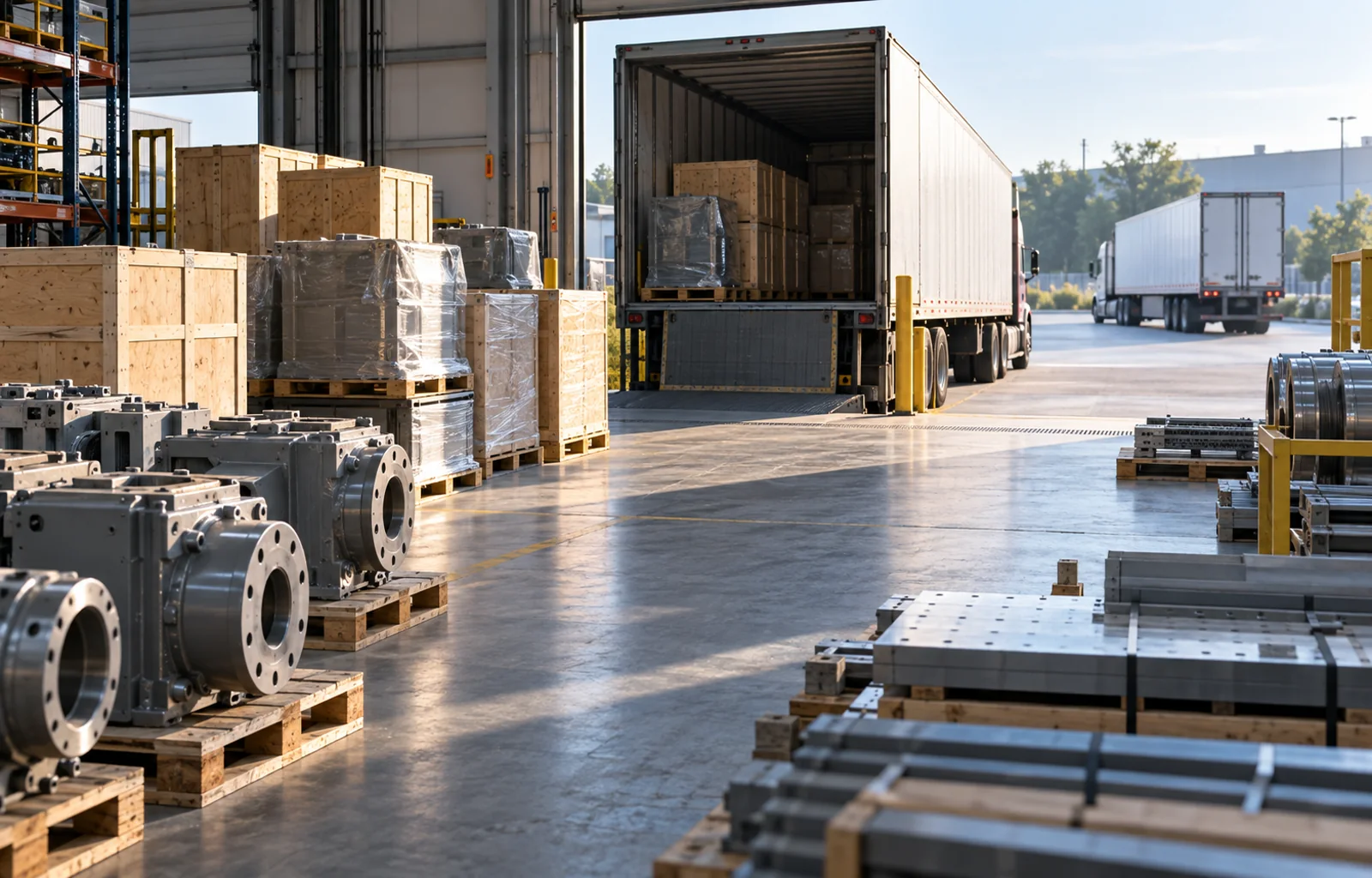

Factories shipped $333.8 billion of durable goods in August, $0.7 billion or 0.2% less than in July, while new orders were virtually unchanged at $338.6 billion, the Census Bureau reported Friday. The same advance report put unfilled orders at $1.609 trillion, up $9.8 billion or 0.6%. For freight planners, those figures describe three different clocks: goods leaving factories now, work newly booked, and work still awaiting completion or delivery.
The shipment decline was concentrated in transportation equipment. That category shipped $109.5 billion, down $2.0 billion or 1.8% from July, and received $114.1 billion in new orders, down $0.7 billion or 0.6%. Its shipments had risen for eight straight months before August. The category covers more than trucking equipment, so its movement should not be translated into a count of commercial-vehicle loads.
Outside transportation equipment, the direction was different. Census Table 1 shows durable-goods shipments excluding transportation rose 0.6% to $224.4 billion, while new orders excluding transportation rose 0.3% to $224.5 billion. That split means the modest overall shipment decline does not establish a broad factory-freight retreat. It signals a change in mix that matters to carriers serving different industrial customers.
The transportation detail also resists a single explanation. Motor vehicles and parts shipments eased 0.7% to $73.2 billion, while nondefense aircraft and parts shipments fell 8.6% to $16.3 billion. Those products differ sharply in value, size and transport mode. A dollar change in aircraft deliveries, for example, is not a proportional change in truck tonnage; neither the release nor the table estimates truckloads.

Other production lanes were still moving forward. Primary-metals shipments increased 1.7% to $31.8 billion, and fabricated-metal-products shipments rose 0.5% to $44.1 billion. Nondefense capital-goods orders excluding aircraft increased 1.6% to $87.6 billion, while shipments in that narrower category increased 0.6% to $85.0 billion. These are current-dollar factory measures, not inflation-adjusted freight volumes, but they give industrial carriers a better customer-level question than the flat orders headline alone.
The order book points to potential later work, not freight available to dispatch today. Total durable-goods unfilled orders reached $1.609 trillion, and transportation equipment accounted for $1.010 trillion of that balance after a $4.7 billion monthly rise. An unfilled order becomes a transportation opportunity only as production, delivery timing, routing and customer acceptance turn it into a shipment. The report does not provide those schedules.
Inventories add another caution. Durable-goods factory inventories increased $3.0 billion or 0.5% to $608.1 billion, including a $1.1 billion increase in transportation equipment. Census inventories include materials, work in process and finished goods, so the increase cannot be read as $3.0 billion of freight ready at a dock. Backlog and inventory growth can coexist with a weaker monthly shipping handoff.
The figures are seasonally adjusted but not adjusted for price changes. They are advance survey estimates, and the Census Bureau says the M3 panel is not a probability sample with a measurable sampling error. July durable-goods orders were revised to a 0.9% gain from the 1.1% advance estimate; more detailed August figures are due October 2. FreightNews therefore treats the category split as a current planning signal, not a settled forecast of fall truck demand.
This is a different reader question from FreightNews' August industrial-production report, which asked which factory output groups drove July's gain, and its September inventory report, which examined July stock relative to sales across the whole economy. Friday's new evidence asks when August durable-goods activity crossed the shipping dock and how much remained on the order book. Carriers can compare their own shipper tender volume and commodity mix with the separate shipment lines, while watching whether the backlog converts into future loads.