
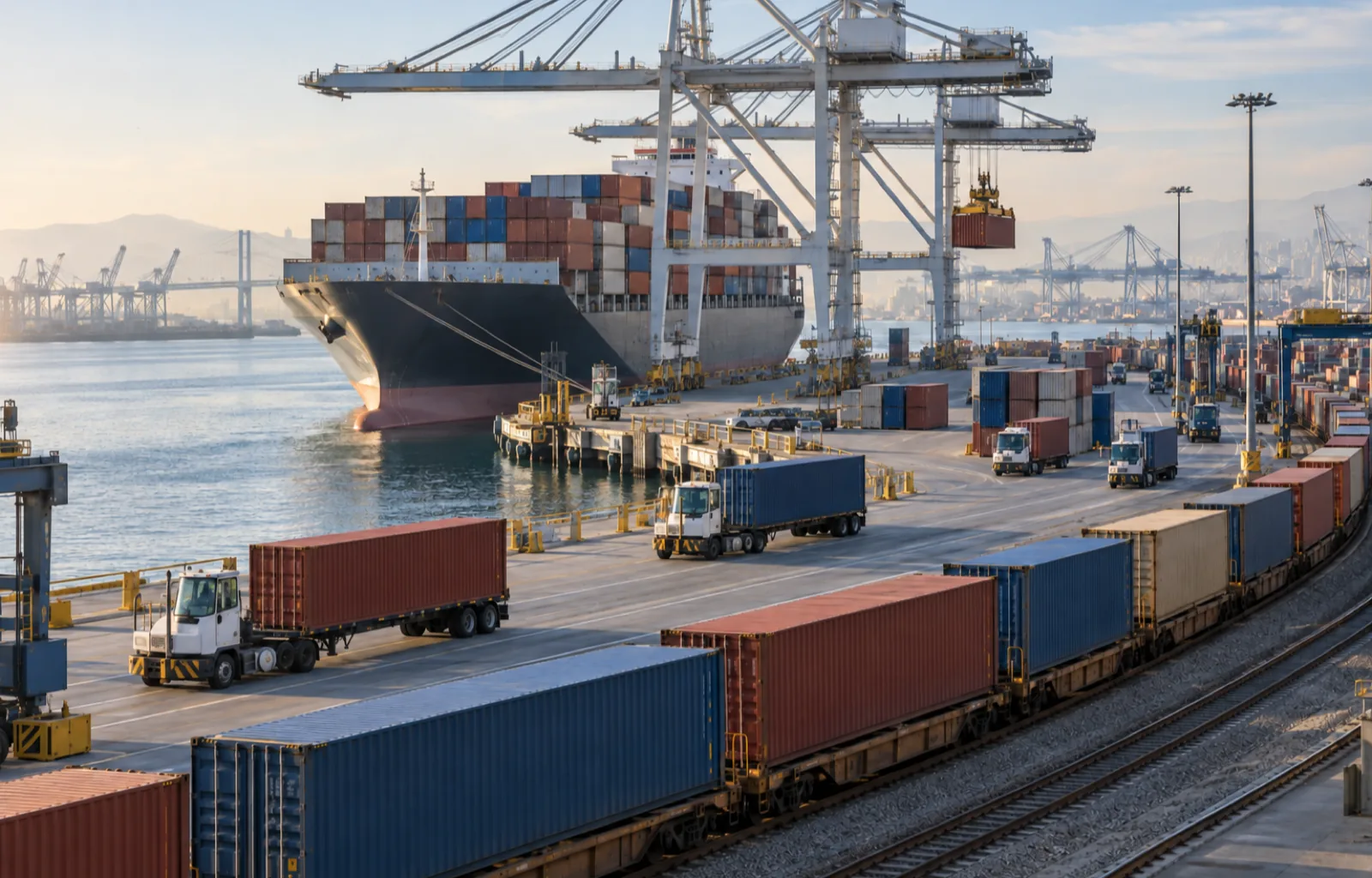

America's largest container gateway closed its busiest three-month stretch without an August import surge. The Port of Los Angeles handled 955,906.5 twenty-foot-equivalent units in August, bringing June-through-August volume above 2.9 million TEUs. August throughput was nearly even with last year and 6% above the port's five-year average for the month.
The cargo mix is more useful than the record alone. Loaded imports reached 500,301.5 TEUs, just under the August 2025 total and 7% above the five-year August average. Loaded exports were 115,561.25 TEUs, down 9% from a year earlier, while empty-container movements totaled 339,685.75 TEUs, up about 4%.
That combination describes sustained work across a major national gateway, not a fresh August acceleration in inbound demand. June exceeded 1 million TEUs and July reached 960,464.25 before August eased again. The record therefore belongs to the accumulated summer flow, while the latest month shows imports holding a high level rather than breaking materially higher.
The port's release attributed the summer strength partly to early holiday shipments and said some merchandise had already entered the United States. That is the port's market assessment, not a count of inventory available to each retailer or a forecast of future truckloads. The public TEU totals also do not identify container dwell, inland destination, mode, weight, dray length or whether an empty move produced revenue for a carrier.
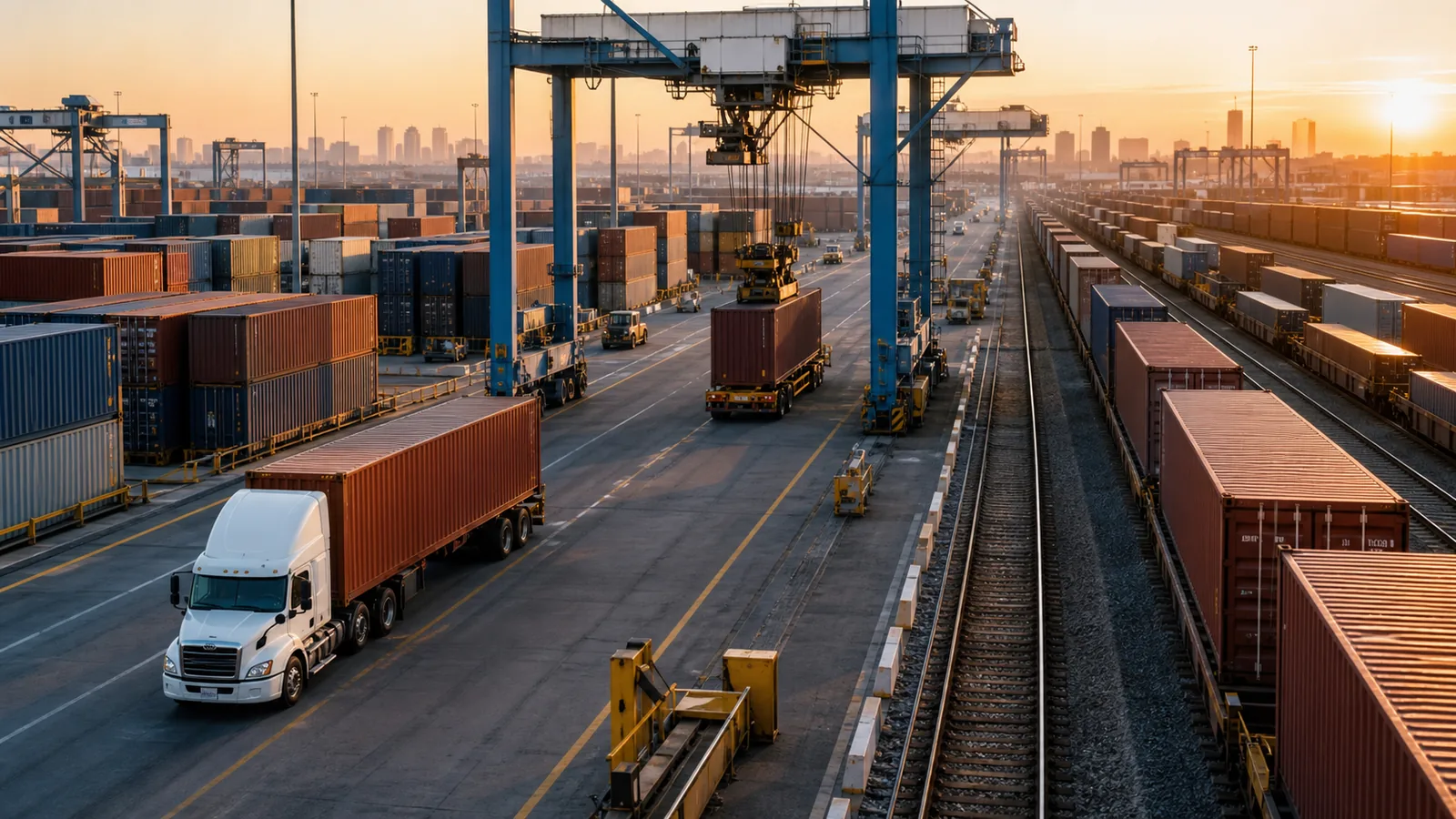
Through August, Los Angeles handled just over 7.0 million TEUs, 1.5% more than in the same period last year. That year-to-date gain is much smaller than the three-month record sounds, another reason to separate an absolute volume milestone from a growth rate. A busy gateway can sustain heavy rail and truck handoffs even when the latest annual comparison is flat.
FreightNews infers that the operating question now moves from how much crossed the dock to how the summer flow clears inland. Drayage carriers, brokers and intermodal users should watch appointment availability, container availability, last-free-day exposure, chassis supply, train cutoffs, rail dwell and warehouse receiving capacity. Those shipment-level facts determine whether high port throughput becomes productive inland freight or added waiting time.
Planners should also keep loaded imports, loaded exports and empties on separate lines. The export decline and higher empty count can change equipment and revenue balance even with stable total terminal work. Protect capacity for confirmed containers and replenishment orders, but do not treat a three-month port record as proof that September demand, rates or every transcontinental lane will rise.