
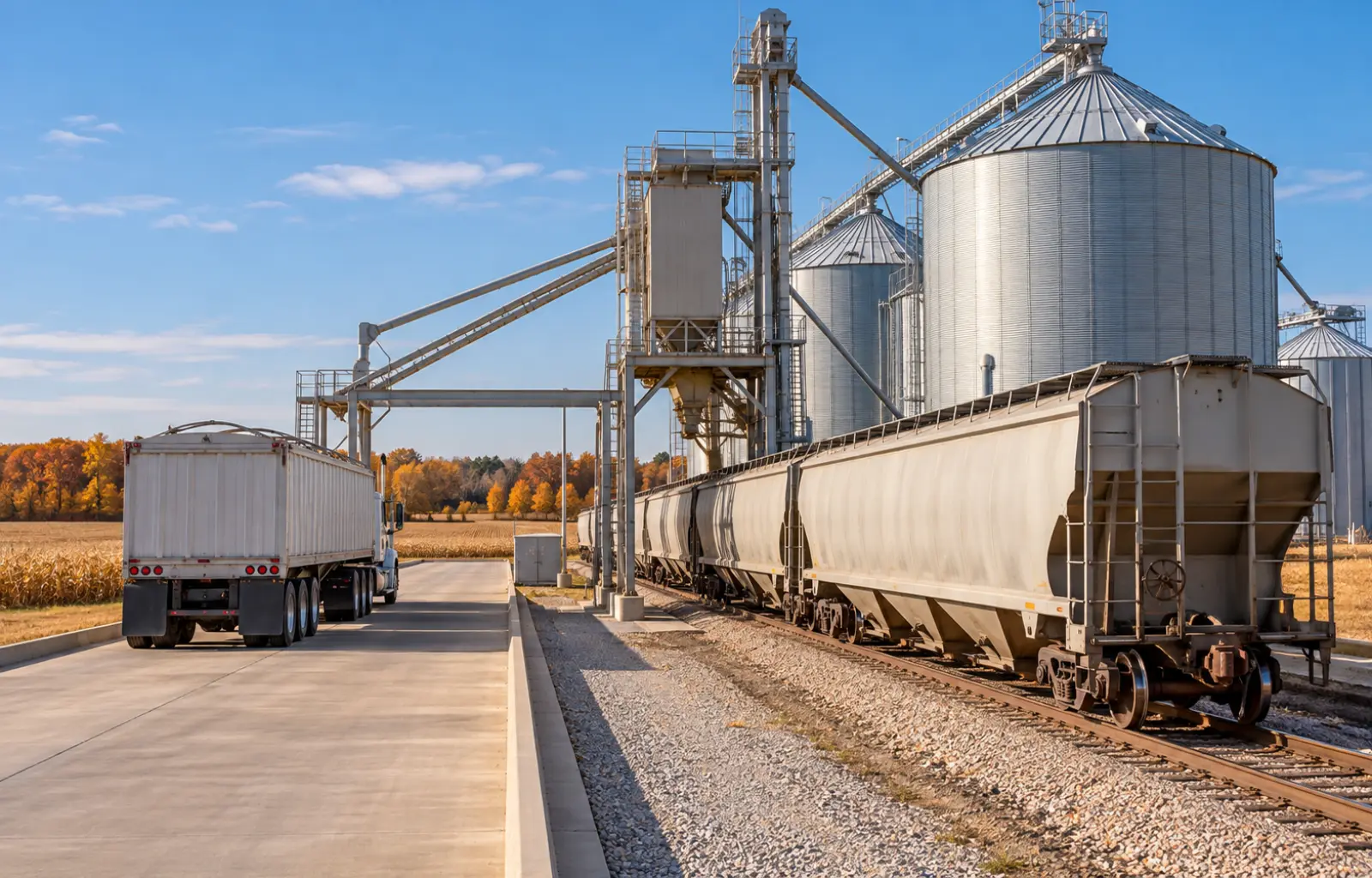
November grain transportation budgets face a delayed fuel bill. USDA’s October 22 Grain Transportation Report says most Class I railroads base grain fuel surcharges on diesel prices from two months earlier. It expects November’s weighted grain surcharge to exceed the series’ July record of $0.61 per mile, reflecting September’s $6.291-per-gallon diesel average. For truck carriers competing for grain movements or serving rail elevators, the useful question is which month’s fuel cost sits inside the competing quote.
Union Pacific supplies a concrete example of that timing. Its published standard carload mileage program lists 84 cents per mile for November, based on September, against 68 cents for October, based on August. The railroad says this program applies to freight charges referencing its authority and does not affect its intermodal surcharge program. The listed schedule is therefore an example to check against a shipment’s pricing document, rather than a universal grain or container rate.
The two sets of figures describe different things. USDA’s grain series combines railroad observations; Union Pacific’s page describes one published carload program. Substituting the weighted number for a particular shipment’s applicable surcharge would obscure the very cost difference a shipper is trying to measure. FreightNews’s analysis is that a useful comparison begins with the governing price document, movement date and billing unit, before any calculation of a modal saving.
On the Union Pacific standard schedule, the October-to-November increase is 16 cents per mile per car. As an illustrative calculation, a shipment assessed over 1,000 rail miles would carry $160 more fuel surcharge per car under those two monthly rates, holding mileage and program applicability constant. That is FreightNews arithmetic, not a customer quote. It excludes the base freight rate, accessorial charges, equipment commitments and any separate truck leg.
 Move beyond disconnected tools
A truck quote needs its own dated assumptions. Record the delivery period, fuel clause, payload and expected loaded and empty miles. Then ask the customer whether the competing rail figure includes fuel for the same service period. A current pump price and a future rail billing schedule can both be accurate while answering different questions. Their difference alone cannot establish which option offers the lower delivered cost.
For an elevator-serving carrier, the rail leg may complement the truck movement. FreightNews infers that the commercial discussion should include who bears a change in onward transportation cost and whether that changes the customer’s receiving plan. Ask for confirmed delivery windows and expected turns before allocating equipment. A published surcharge increase does not, by itself, establish more truckloads, a canceled train or a higher truck rate.
Treat this as a November quote-review task: preserve the applicable rail authority, its basis month and effective month alongside the truck proposal. Recalculate when the service month changes, and keep assumed mileage visible. The decision is whether the complete movement still works at the agreed price and schedule. This analysis reports a published cost mechanism; it does not predict a nationwide shift from rail to highway.