

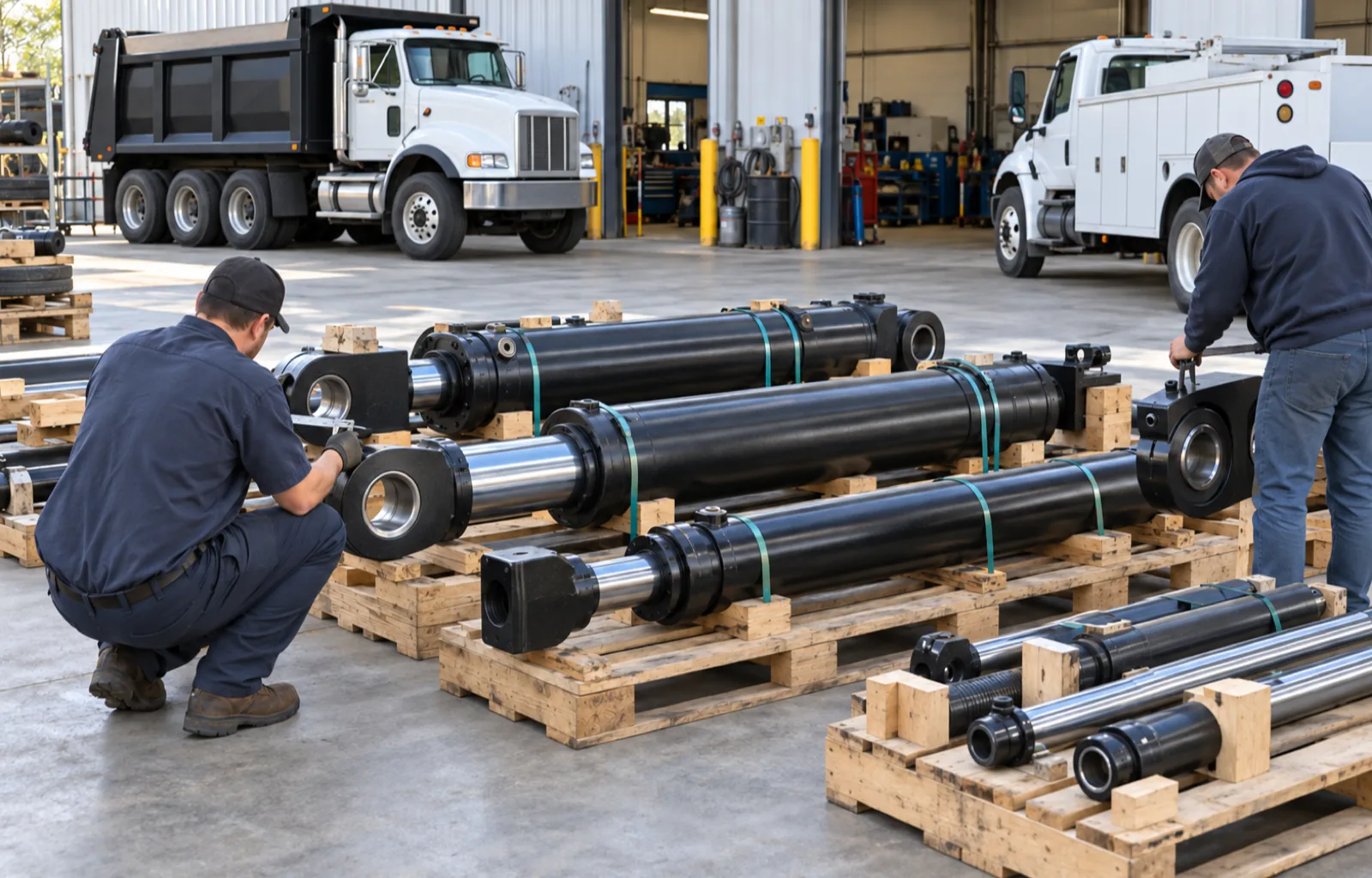
The Commerce Department has opened antidumping investigations into linear hydraulic cylinders from Canada, China, India, South Korea and Mexico, plus countervailing-duty investigations into the same merchandise from China, India and Mexico. The notices were published September 14 and identify September 8 as the applicable initiation date. They begin investigations; they do not announce a new trade-remedy duty on replacement parts or completed trucks.
The written scope starts with physical characteristics. Covered linear-acting cylinders have steel barrels, an inner diameter of at least one inch and a retracted length of at least four inches. Commerce lists tie-rod, welded-body, telescopic, plunger, rodless, position-sensing, single-acting, double-acting, ram and other hydraulically activated designs, so a familiar shop name alone cannot resolve coverage.

Components can enter the case too. The notices include covered steel barrels, chrome-plated or chrome-coated piston rods, and parts attached to, assembled with or shipped with a covered barrel or rod. They separately say attachments such as mounts, pistons, seals, valves, sensors and hydraulic lines are outside that component provision when imported or invoiced separately from a covered cylinder, barrel or rod.
Packaging and assembly history matter. The scope includes qualifying cylinders attached to or imported with Chapter 84 equipment, although only the cylinder is covered in that situation. It also reaches covered cylinders, barrels and rods that undergo minor processing or assembly in a third country. Commerce says the written description controls even though the notices provide several HTSUS statistical reporting numbers for Customs convenience.
The connection to vocational trucking is practical, not universal. NTEA's dump-body chassis guide says dump trucks use hydraulic cylinders to articulate the body for unloading, making cylinder sourcing relevant to some upfitters, dealers, maintenance programs and fleets. The Commerce notices do not say every truck hydraulic part is covered, and FreightNews does not extend the case beyond the products that meet the written scope.
The large percentages in the antidumping notice are petition-based investigation estimates, not current surcharges. Commerce reports estimated dumping-margin ranges beginning at 56.79% for Mexico and reaching 744.85% at the top of the Canada range, with separate calculations for China, India and South Korea. Those figures support opening the inquiries; they are not a published cash-deposit instruction or a forecast of the eventual landed cost.

Several gates remain. Commerce says countervailing-duty preliminary determinations are due within 65 days of initiation and antidumping preliminary determinations within 140 days unless postponed. The U.S. International Trade Commission has scheduled its preliminary vote for September 28; a negative injury determination for a country would terminate the corresponding investigation rather than advance it toward an order.
The closest actionable deadline is about definition, not buying inventory. Scope and product-characteristic comments are due to Commerce by 5 p.m. Eastern on September 28, with rebuttals due October 8. Suppliers and importers that believe a barrel, rod, attachment, invoicing pattern or equipment combination is unclear have a record-building window before the preliminary rate stages.
FreightNews infers that procurement teams should preserve an item-level origin and configuration file now: producer, exporter, manufacturing country, third-country processing, bore, retracted length, barrel and rod material, attachments, invoice relationship, equipment classification, HTSUS code, quoted lead time and the contract term for a later deposit change. That record supports a broker or trade-counsel review without treating an investigation notice as a reason to ground equipment or prepay an unverified surcharge.