

NHTSA has denied a petition seeking a defect investigation into the absence of a redundant mechanical wheel-fastener locking system on heavy vehicles using 10-hole, 22.5-inch hub-piloted wheels. The August 17 notice says the agency found insufficient evidence that the configuration presents a systemic safety defect. That is a decision on the petition, not a declaration that loose wheel fasteners no longer require fleet attention.
The petitioner argued that thermal cycling, vibration, dynamic loads, embedment relaxation and joint fatigue can loosen fasteners in service. NHTSA's Office of Defects Investigation reviewed consumer complaints and Early Warning Reporting records, then examined six months of FMCSA violation data for commercial vehicles cited with loose or missing wheel fasteners. The notice does not publish event counts from those searches.
The agency says the reviewed instances typically appeared at higher mileages after fleet maintenance rather than from an inherent manufacturing or design defect. It also points to the required daily pre-trip inspection as a control for detecting loose fasteners before operation. NHTSA left open the possibility of future action if additional information warrants it.
That boundary matters. The denial does not create a recall, a new redundant-lock requirement, a torque specification or an exemption from existing inspection and maintenance duties. It also does not prove that every loose-fastener event is maintenance-caused. Fleets should keep manufacturer instructions, wheel and fastener specifications, service history and observed conditions tied to the exact vehicle and wheel end.
 See the connected carrier TMS
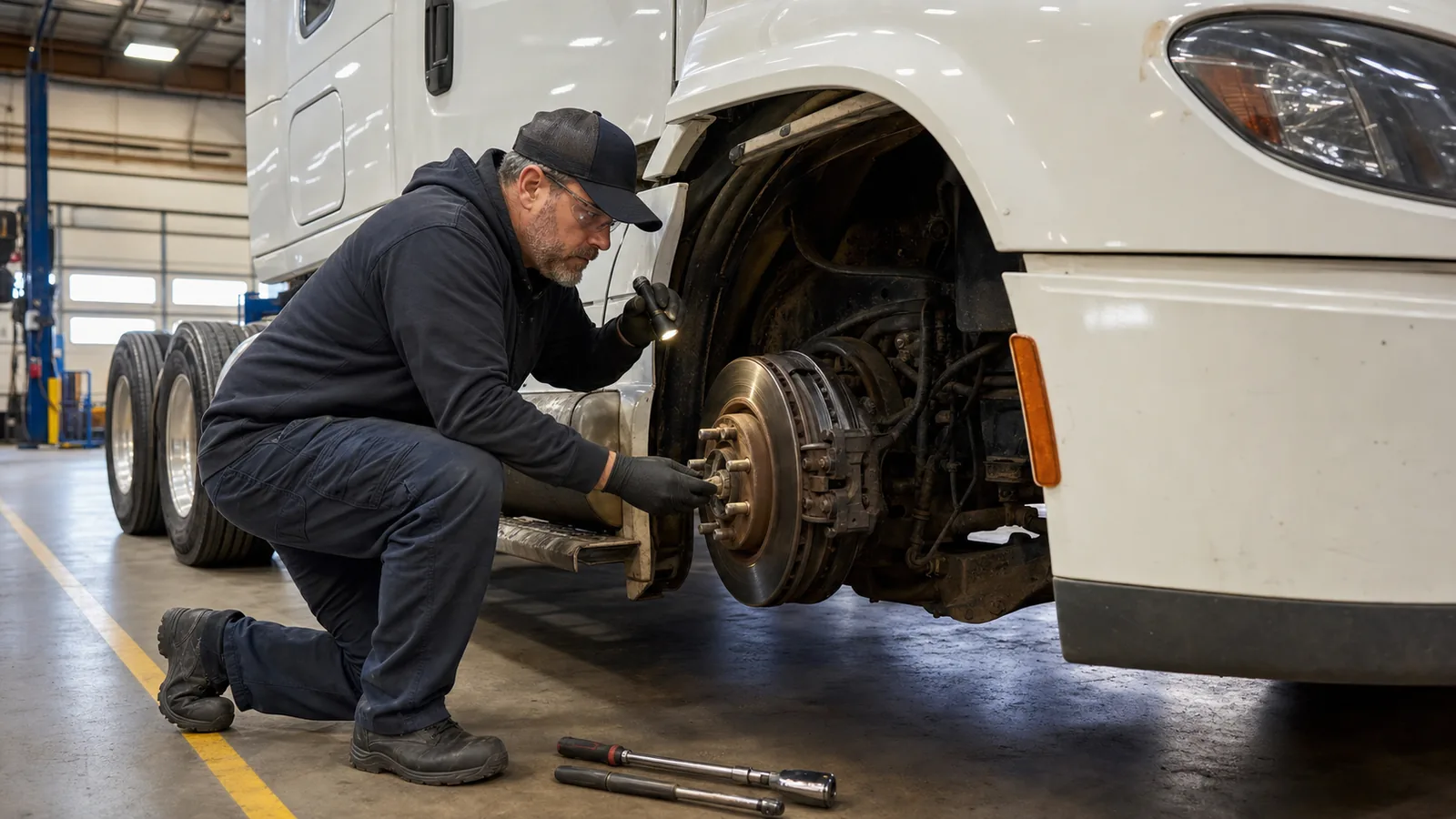
The operating inference is that the strongest control remains a repeatable shop-to-driver handoff. Use the specified fasteners and tightening sequence, calibrated tools and the vehicle or component maker's torque and follow-up instructions; document who performed the work and when; and brief drivers on the wheel-end conditions that require a stop and escalation. Do not substitute a generic torque number or an aftermarket device for the applicable manufacturer procedure.
For maintenance leaders, the petition's denial is not a reason to close the file. It is a reason to audit the service process the agency's review put in view: parts verification, surface condition, installation method, tool calibration, post-service checks, pre-trip reporting and defect closeout. A regulator's finding of insufficient evidence for a systemic defect leaves the fleet's vehicle-level control work intact.