

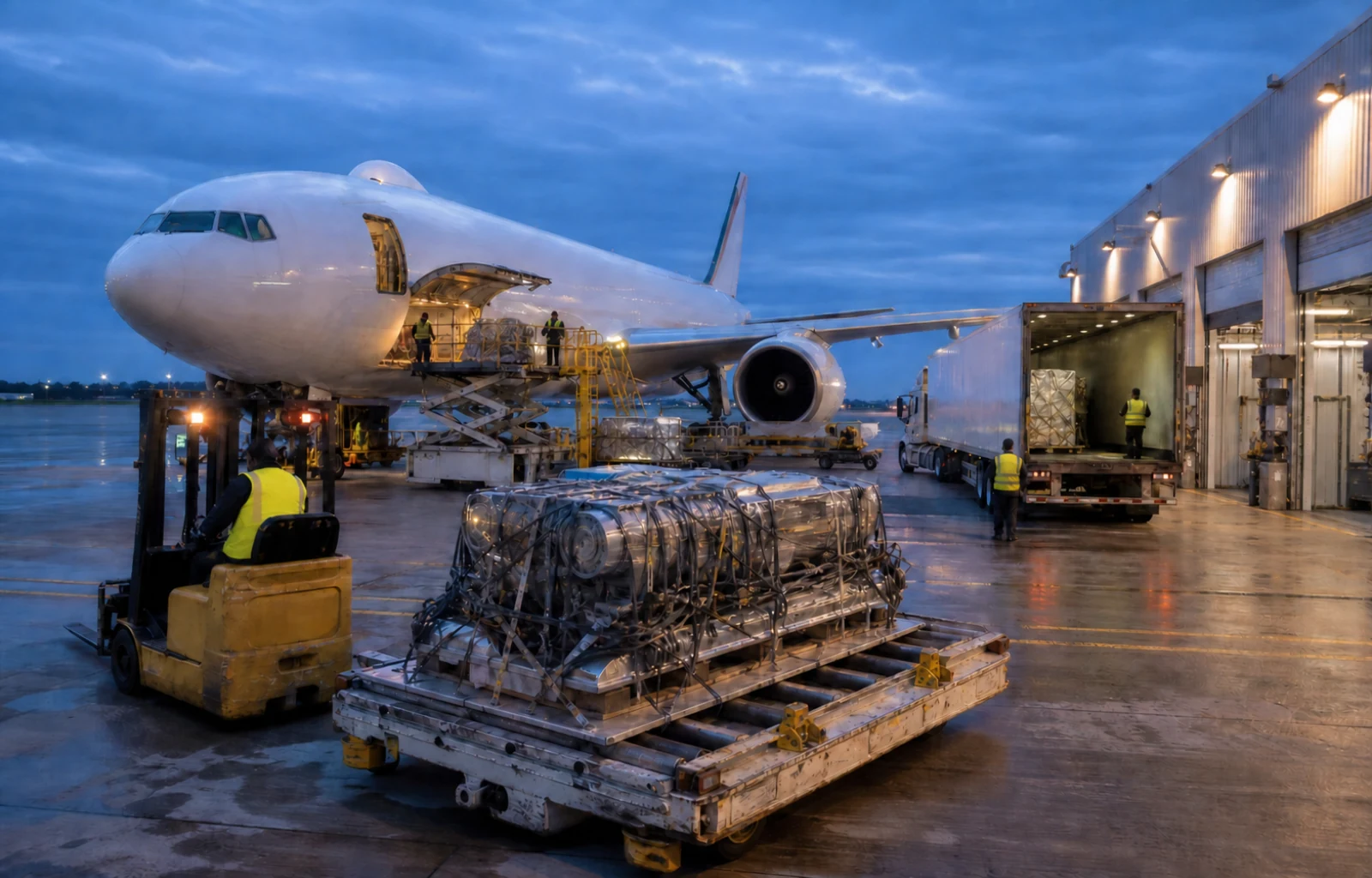
UPS has placed its new Mexico heavy-air-freight service inside a larger network investment that the company says exceeds $2 billion. The August 24 announcement covers projects begun in 2024 and continuing through 2028 across its international, healthcare and supply-chain businesses.
The North American operating change is more specific than the headline total. UPS announced in May that it had invested nearly $50 million in network capabilities and dedicated automotive and industrial teams, and that North American Air Freight would introduce time-definite heavy air service to and from Mexico. The company said one-, two- and three-day options would begin in August.

UPS describes the service as one integrated path across transportation, customs brokerage and warehousing. It also says a team of more than 300 automotive and industrial subject-matter experts supports the offer. Those are company descriptions of network design and staffing, not independent measurements of transit reliability, border clearance or available capacity.
The broader $2 billion announcement reaches beyond Mexico. UPS cited 27 temperature-controlled cross-dock facilities, new or planned hubs in the Philippines, Canada and Hong Kong, and other network changes across Europe and Asia-Pacific. It did not assign the entire $2 billion to North America or disclose a project-by-project spending table, so the total should not be treated as the price of the Mexico service.
FreightNews infers that the trucking consequence sits at the time-definite handoffs. Heavy industrial parts moving by air still need origin pickup, airport transfer, customs data, secure staging and final delivery. If one provider coordinates more of that chain, shippers may reduce vendor handoffs; they may also concentrate exception handling and status data inside one operating system. That is an operating implication, not a claim that every shipment will move faster.

Important commercial details remain outside the announcements. UPS did not publish a lane list, rate card, weight limits, pickup cutoffs, capacity commitments, customs-document matrix or claims terms for the new options. A stated one-, two- or three-day service is therefore a product window to verify, not a universal transit promise for every origin, commodity and destination.
Manufacturers, brokers and ground carriers should test a live lane before reallocating emergency capacity. Ask where the clock starts and stops, who owns customs corrections, which events feed the shipper's system, how after-hours exceptions escalate and what ground pickup or delivery is included. The network investment is confirmed; the operational fit still has to be proven shipment by shipment.