

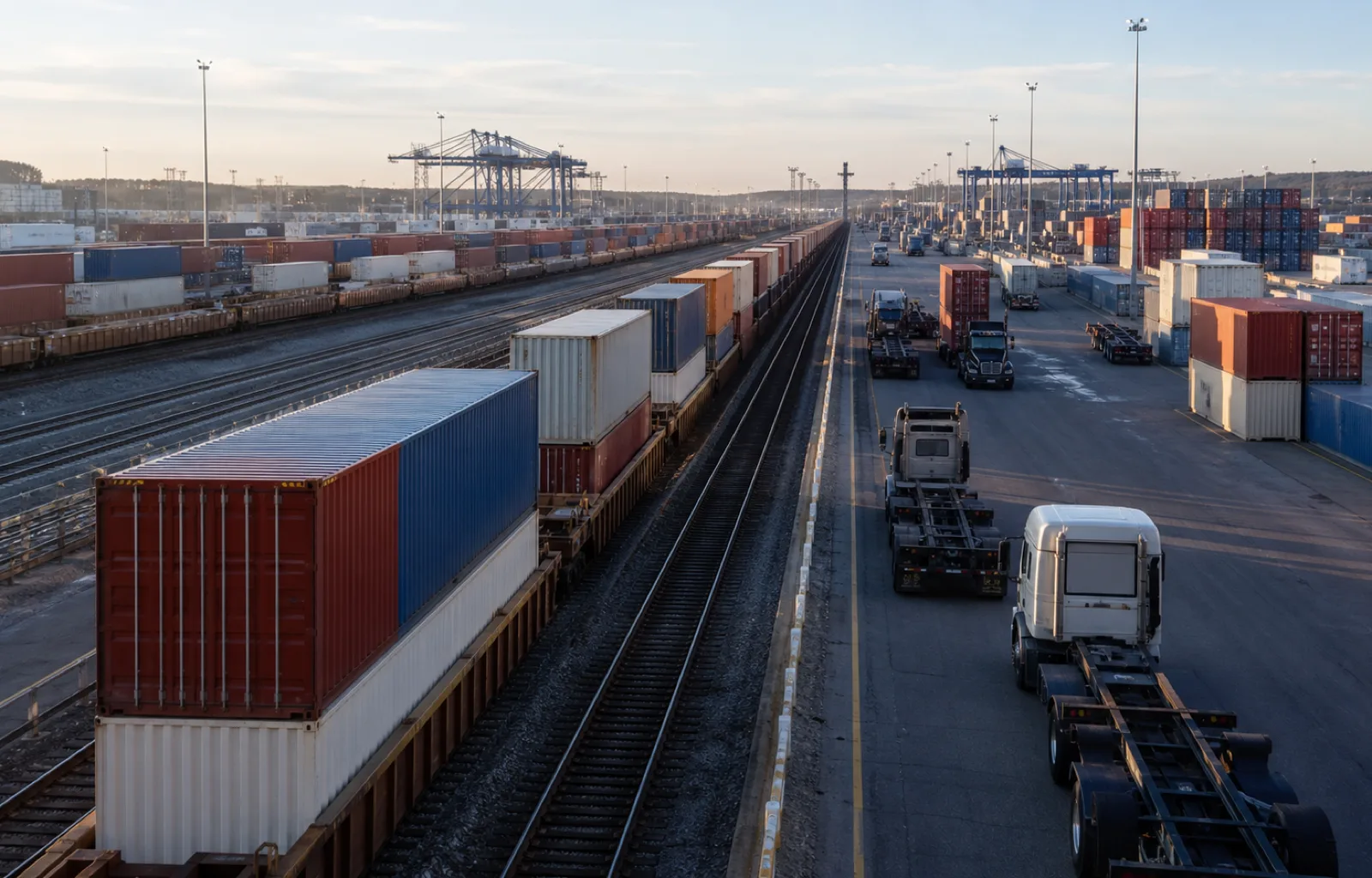
A national rail measure is pressing close to its record as freight buyers enter the second half of the year. The Association of American Railroads said its seasonally adjusted Freight Rail Index rose for a fourth consecutive month in July and reached the second-highest level in the series.
The index is designed to follow economically sensitive freight. It combines intermodal and carload traffic while excluding coal and grain, two large categories that can move for reasons that are not closely tied to the broader economy. That construction makes the index useful, but it also means the near-record reading is not a count of every rail shipment.

The underlying traffic was broad. Total U.S. carloads increased from a year earlier for a seventh straight month, and 14 of the 20 major carload categories posted gains in July. Through July, total carloads were up 2.7%; excluding coal, they were up 4.3%. For July alone, AAR put the gain at 0.5% with coal and 3.2% without it.
Intermodal carried the clearest network signal. July volume was the sixth highest for any month in AAR's records and the highest July on record. Through the first seven months of 2026, intermodal volume was at a record level and 3.8% above the same period last year. Grain carloads were up 13% year to date, nearly 81,000 carloads, while coal declined for a fifth straight month in July.
Equipment deployment moved with the traffic. AAR reported 53,000 fewer rail cars in storage than at the start of the year, and the stored share of the fleet fell from 21.7% to 18.5%. That is evidence that more equipment is being used; it is not proof that every origin, destination, container type or drayage market has the capacity a shipper needs.
The boundaries matter for trucking. AAR is an industry association, and its volumes do not directly measure truckload tenders, highway rates, rail profit, customer inventory or on-time performance. An intermodal gain can reflect stronger goods demand, a shift from highway, import timing, better rail service or several forces at once. The national totals cannot identify which explanation controls a particular lane.

FreightNews infers that a near-record freight index creates both a competitive test and a handoff opportunity for motor carriers. Stronger intermodal can challenge long-haul highway pricing on lanes with usable terminals, yet it can also increase demand for dependable drayage, transload and recovery capacity around those terminals. That is an operating interpretation of AAR's data, not a forecast that truck rates or volumes will move by a specified amount.
The practical comparison belongs at the shipment level. Shippers and carriers should place door-to-door rail cost beside highway linehaul, fuel surcharge, terminal access, chassis time, drayage turns, dwell, claims and the inventory cost of added transit variability. A lower base quote can lose its advantage if a handoff repeatedly consumes the delivery window.
For fall bids, the index is a reason to test the modal plan rather than declare a winner. Watch terminal-specific availability, train schedules, container supply, tender acceptance and recovery performance. A national rail record can change the negotiating backdrop; the service promise still has to survive every handoff on the lane.