
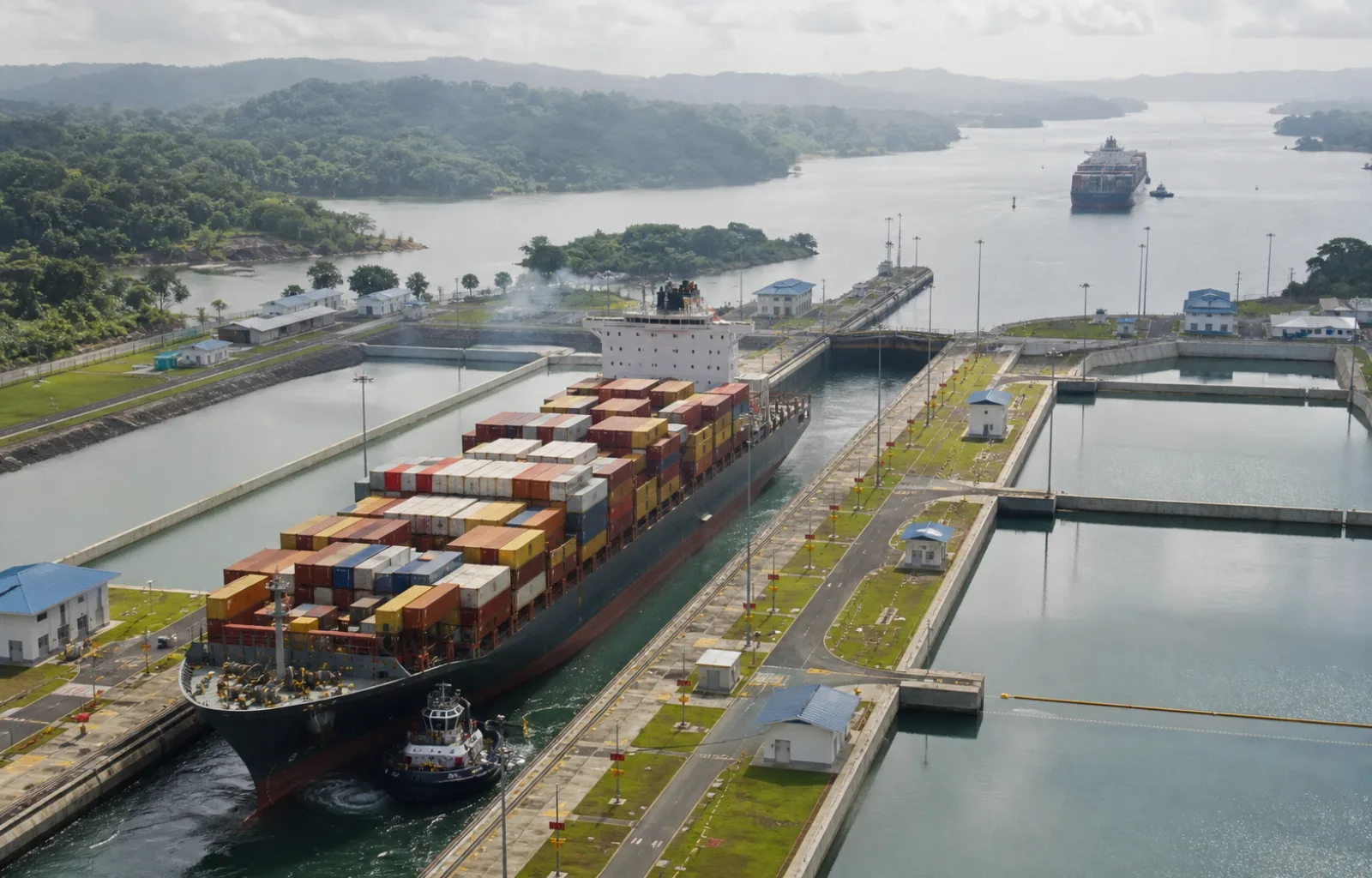
The Panama Canal will reduce capacity in two steps as rainfall in its watershed runs below projections. The Canal Authority says the daily schedule will fall to 34 transits on September 3—9 Neopanamax and 25 Panamax—then to 32 on September 15 when Panamax capacity drops to 23. Vessels without reservations may face longer waits, while only a confirmed reservation guarantees a transit date.
A separate August 28 notice changes how some of the available capacity can be booked. For booking dates beginning September 13, the authority will let Neopanamax customers obtain multiple slots on the same or consecutive dates, allocate 63 slots per week and permit qualifying swaps or substitutions. It also set a minimum of five full-container slots on each booking date.
Draft timing moved too. The previously announced maximum authorized draft of 48 feet was postponed to September 2, and the 47.5-foot limit was postponed to October 1. Those are operating parameters for vessels; they do not establish the weight, count or timing of any U.S. truckload.
The notices do not announce a canal closure, cargo embargo or specific reroute, and they do not say that a named vessel will miss a U.S. port call. FreightNews infers that the national trucking consequence begins only when a vessel's reservation, draft plan or arrival estimate changes a container's handoff at an East Coast, Gulf Coast or West Coast gateway.
 See the connected carrier TMS
That boundary matters because a general capacity cut is not a shipment instruction. Before changing drayage, rail or warehouse appointments, shippers and brokers should ask the ocean carrier for the vessel and voyage, confirmed canal reservation, current draft plan, terminal arrival estimate and alternate routing trigger. Record which item is confirmed and which remains a forecast.

Drayage carriers should keep terminal appointments, free time, chassis availability and receiving capacity tied to the latest container event rather than the Canal Authority's aggregate daily count. If a date moves, preserve the carrier notice and event timestamp so storage, detention and customer exceptions can be traced to the actual handoff instead of a broad disruption label.
The booking changes may give large customers more flexibility inside a smaller operating envelope, but the notices do not quantify freight rates, U.S. port volumes or inland capacity. A shift toward another gateway, land bridge or sailing would be an inference until the carrier publishes a revised itinerary or the terminal reports a changed arrival.
For the September transition, monitor the Canal Authority's reservation and transit notices, then verify each affected shipment with its ocean carrier. The confirmed booking controls the canal date; it does not reserve a chassis, rail slot, driver or warehouse door on the other side.