

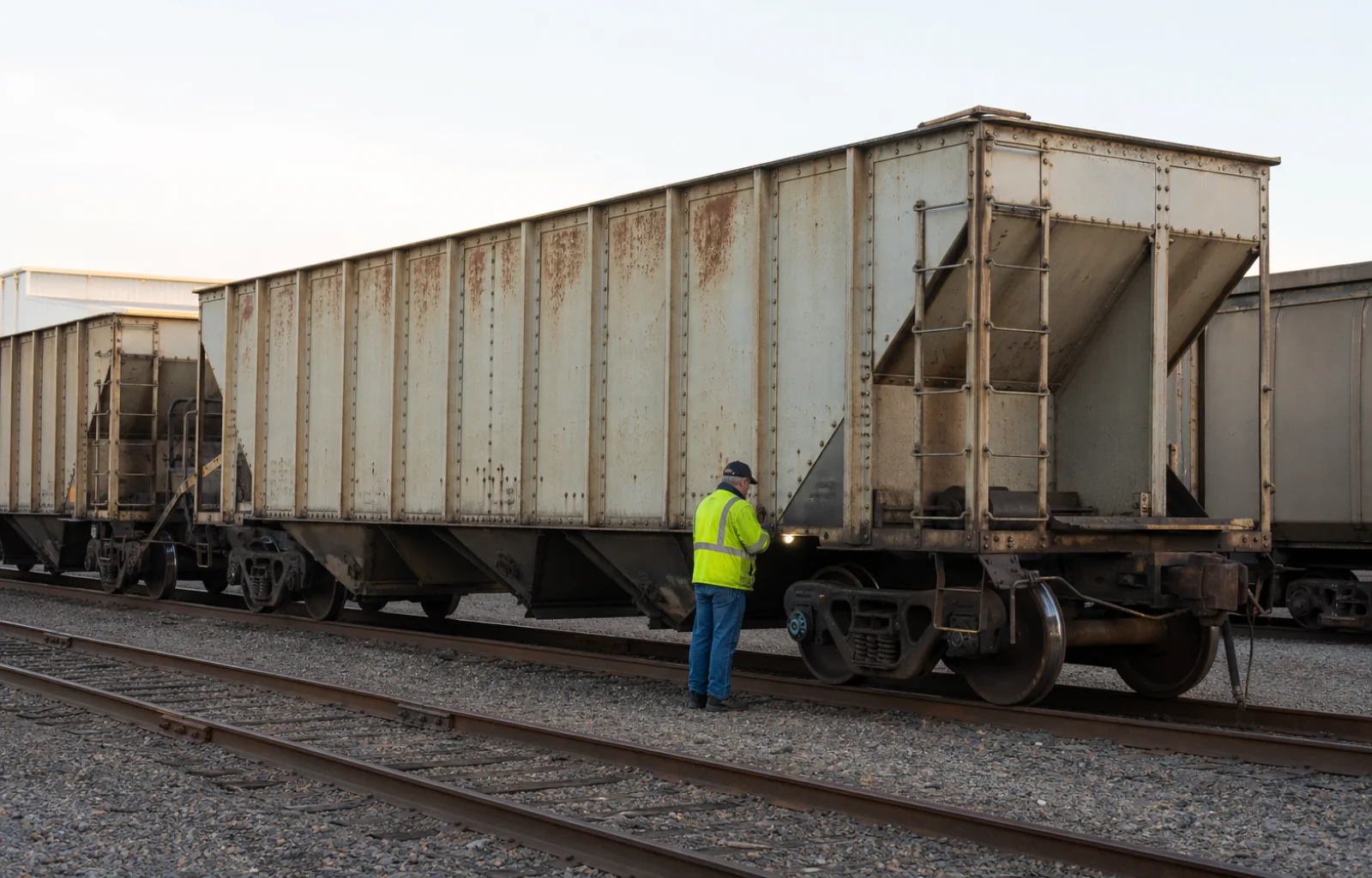
Freight cars more than 50 years old will move from a federal special-approval process to a notice process on September 30. The Federal Railroad Administration's final rule lets a railroad place or keep an overage or otherwise restricted car in service after sending FRA specified operating and ownership information. The change removes an approval queue; it does not declare every older car fit for service.
The required notice identifies the operating railroad, the entity controlling operation and maintenance, and each car's type, capacity, reporting marks, number, condition, status and age. It must also state the restricted design or component, maximum load, maximum speed, territorial limits and every railroad expected to receive the car in interchange. That is substantially the information previously carried in a petition, but the railroad no longer waits for FRA to approve it.
Existing approvals do not vanish on the effective date. A railroad may continue using an approval that was in force on September 29 until it expires, or it may file the new notice and supersede the age-related conditions. FRA says other approvals or waivers that rest on a different basis remain in effect.

A separate path remains for cars accepted under an industry increased-life standard such as the Association of American Railroads' Rule 88 process. Those cars can be exempt from the federal notice requirement for as long as 65 years from original construction if the required increased-life status and service date are stenciled on the car. The rule does not erase the AAR interchange standards that participating railroads apply.
The safety floor is unchanged. FRA says every freight car in service remains subject to Part 215 and routine pre-departure mechanical inspection, and a noncompliant condition can still keep a car out of service or support an enforcement citation. The agency declined to mandate the proposed extra shop-inspection and brake-test schedule for overage cars, while noting that age can justify heightened owner attention and comprehensive structural review.
FRA estimates only 30 notices a year across a respondent universe of 754 railroads, totaling 45 burden hours. That estimate is a paperwork forecast, not a count of all overage cars or a projection of new rail capacity. The agency also says the rule is not a significant regulatory action and expects avoided petition and approval costs to outweigh the limited notice expense.
For rail-served shippers and fleet owners, the operating question is now whether the car file can support the service plan without the former approval document. Before tendering an overage car, match the notice or increased-life status to its load, speed, territory and interchange partners; preserve inspection and repair evidence; and verify that unrelated waivers still apply. FreightNews infers that the paperwork becomes faster, while the cost of an unfit car entering service does not.