
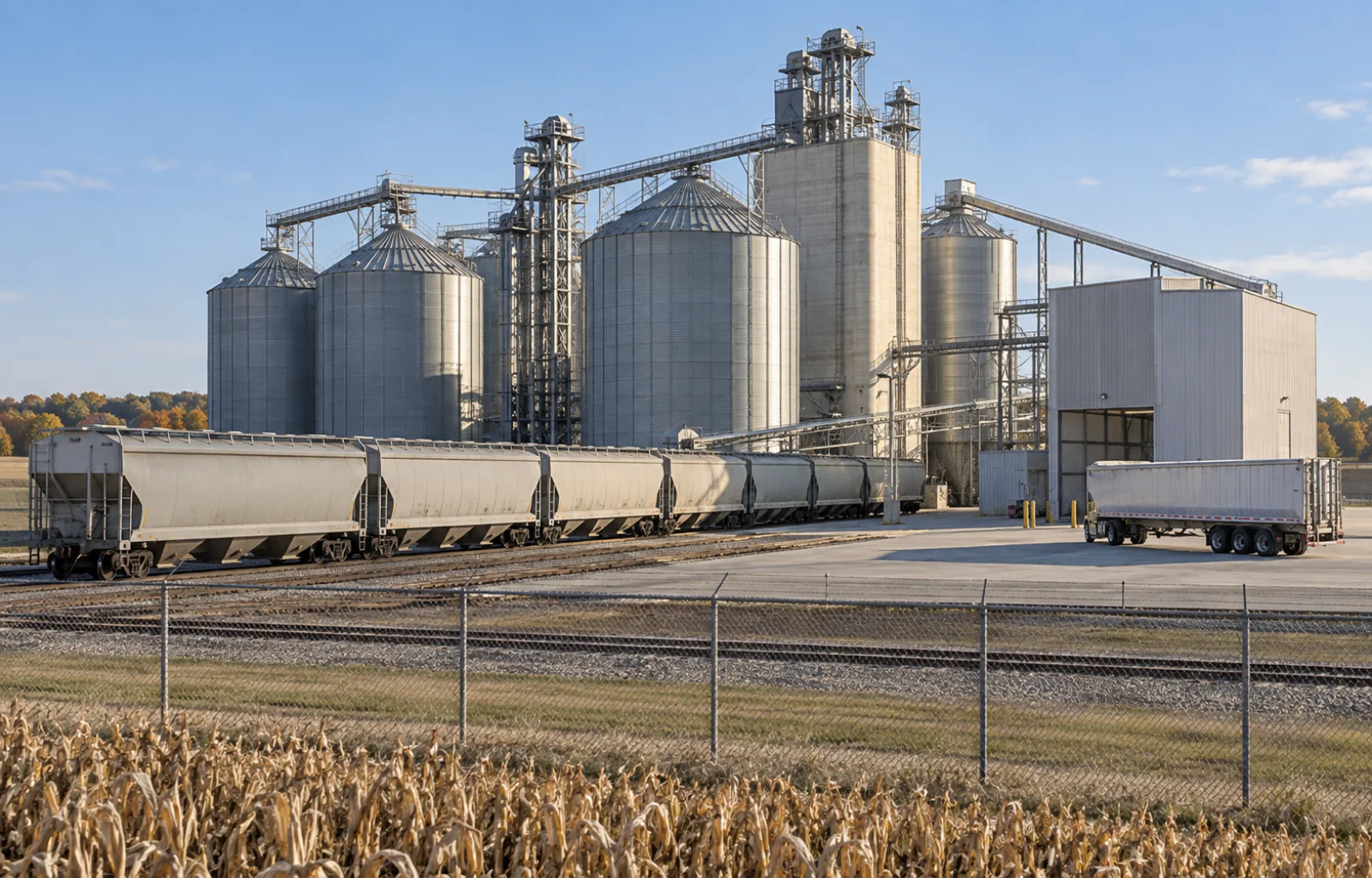

Corn’s new marketing-year rail prices are now part of the harvest transportation calculation. USDA’s October 1 Grain Transportation Report says BNSF raised corn tariffs to Pacific Northwest export terminals by $200 per car across origins. Most BNSF shuttle origins serving Hereford, Texas, also rose $200, while about one-fifth had no change. Union Pacific’s published fall program specifies a $225-per-car increase for the listed corn and milo tariff items effective October 1.
The changes are not identical across destinations or equipment. USDA reports that BNSF removed the previous $200-per-car difference between Hereford and the U.S.-Mexico border. Union Pacific’s April 20 customer notice separately identifies a 6% increase in its mileage-scale item, describes heavy covered-hopper applicability and preserves existing spreads for light cars. It says the published tariff items take precedence over the general announcement. A shipper needs the applicable origin, destination, commodity and car specification to obtain its actual charge.
Fuel and railcar access remain separate costs. USDA reports an average rail fuel surcharge of $0.59 per mile, 11 cents above the prior month. Its October shuttle secondary-market bids and offers averaged $700 per car above tariff in the week ending September 24, down $188 from the preceding week. That older weekly observation is a reference point for railcar access, not an October 4 executable quote or a charge owed by every shipper.
Adding $200, $225, $700 and a mileage surcharge into one universal harvest premium would mix different railroads, lanes and purchasing arrangements. Some customers have contracted capacity; others obtain access on different terms. A secondary-market premium must be matched to the actual service being purchased before it enters the same cost sheet as a tariff. None of these rail figures sets a farm-to-elevator truck rate or guarantees additional grain loads for a carrier.
FreightNews infers that a useful bid comparison has two levels. First, assemble the shipper’s applicable rail tariff, fuel calculation, capacity-access cost and any quoted terminal charges for the same movement and date. Second, build the proposed truck movement from its own loaded and empty miles, actual payload, fuel recovery, loading time and receiving arrangement. Compare the same shipment quantity and delivery commitment. A per-car rail increase cannot be allocated to each truck trip without knowing those quantities and which transport leg the truck would replace or serve.
The receiving point matters as much as the quoted linehaul. Before treating a rail price increase as an opportunity to divert freight to highway, establish whether the customer can accept truck deliveries, has released the grain and can meet the required timing. For first-mile carriers feeding a rail elevator, a higher downstream tariff can change the customer’s budget without changing the truck’s route. Confirm whether the request is for additional volume, a different destination or simply a revised price on existing work.
Keep the October 1 effective date with the quote and request the controlling published tariff or current railroad price confirmation. Recheck fuel and capacity-access terms when the shipment is booked. The new corn charges justify reopening the comparison; a carrier’s commitment should follow a fully specified load and a workable delivery plan.