
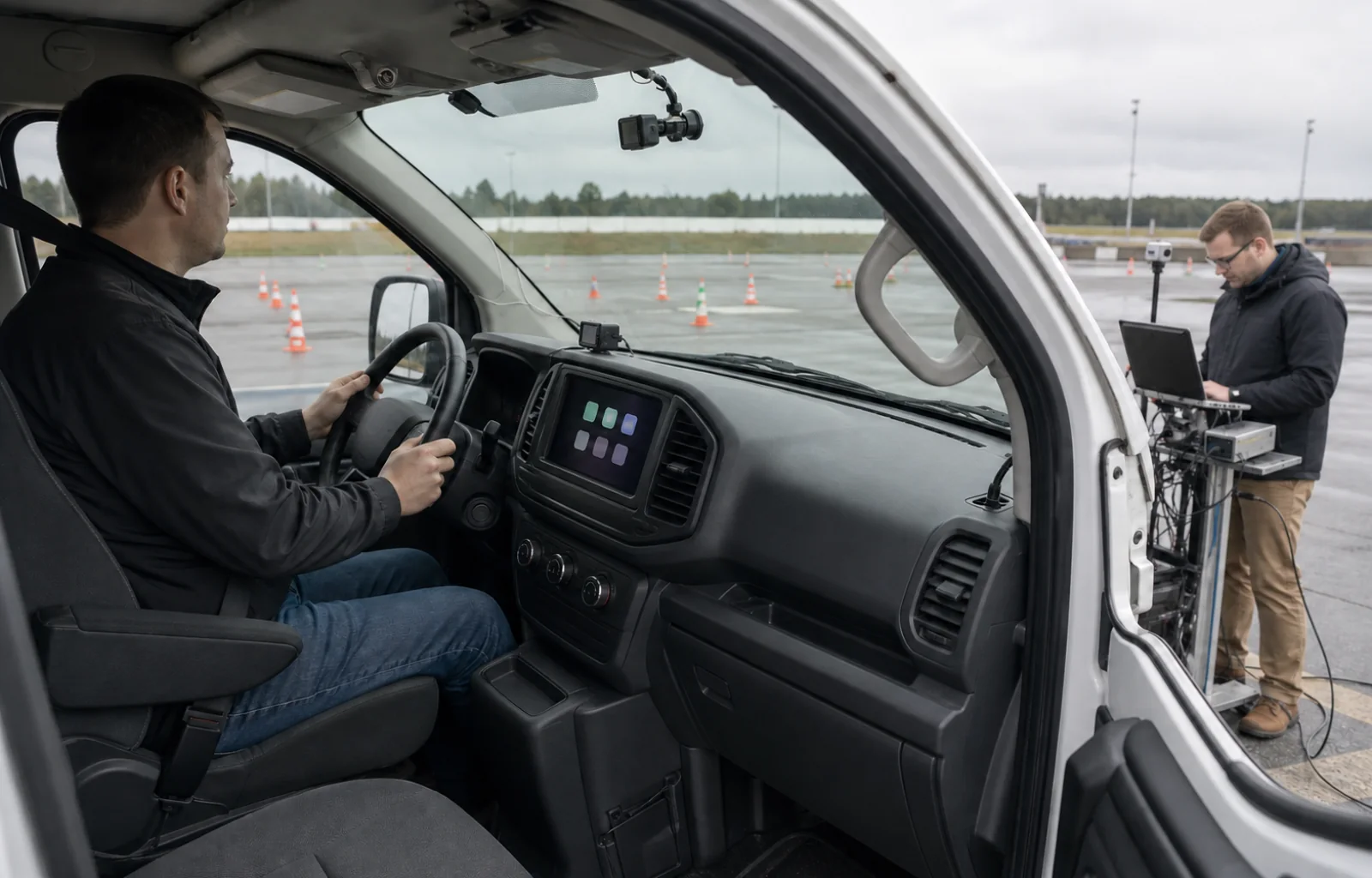
The National Highway Traffic Safety Administration has moved a proposed smartphone-integration distraction study to Office of Management and Budget review. The August 21 notice describes how the agency wants to test tasks performed through vehicle displays, but it does not publish findings, revise NHTSA's distraction guidelines or impose a new rule on fleets.
The planned work has two parts. An occlusion study would have up to 56 participants perform six to nine standardized tasks while electronic goggles alternate between clear and blocked views every 1.5 seconds. Researchers would measure the display-viewing time needed to finish each task, errors, recovery from errors and participant assessments of whether a task is reasonable while driving.
A second phase would put 72 participants on a 0.84-mile closed course at Utah Motorsports Campus. NHTSA proposes to collect eye-tracking data, lane position, speed, steering movement, task completion time, mistakes and responses to events while drivers use a subset of the interface tasks. The notice says participants must have experience with Android Auto or Apple CarPlay, but the research is about interaction safety rather than a product endorsement.
The agency says it wants to compare modern smartphone-mirroring systems with older original-equipment interfaces and determine which commonly completed tasks comply with its existing visual-manual distraction guidelines. NHTSA received two comments during an earlier 60-day notice and made no changes to the study design based on them. The new comment deadline is September 21.
 See how the work connects
Fleet managers should keep the procedural boundary clear. OMB approval would authorize an information collection; it would not prove that a particular interface is safe or unsafe. The study must still be conducted and analyzed before it can inform future guidance or policy decisions, and the notice does not set a compliance date, equipment mandate or operating restriction.

FreightNews infers that the research could eventually give safety teams a more structured way to evaluate task design than a simple screen-or-no-screen policy. Glance demand, error recovery and vehicle-control effects may matter more than whether an application appears on a built-in display. That is an operating implication from the test plan, not a result NHTSA has reported.
Carriers do not need to wait for a federal study to inventory their own in-cab tasks. Document which dispatch, navigation and communication functions can appear while a vehicle is moving, identify tasks that require repeated or prolonged interaction, and move nonessential work to a parked workflow. Keep that review separate from any claim about the pending NHTSA research.
The useful watch point is the sequence: comments close September 21, OMB decides whether the collection may proceed, researchers conduct the two test phases, and only then can evidence be analyzed. Until results exist, the notice is best treated as a federal test plan and an early signal about the measurements regulators consider relevant to driver distraction.