

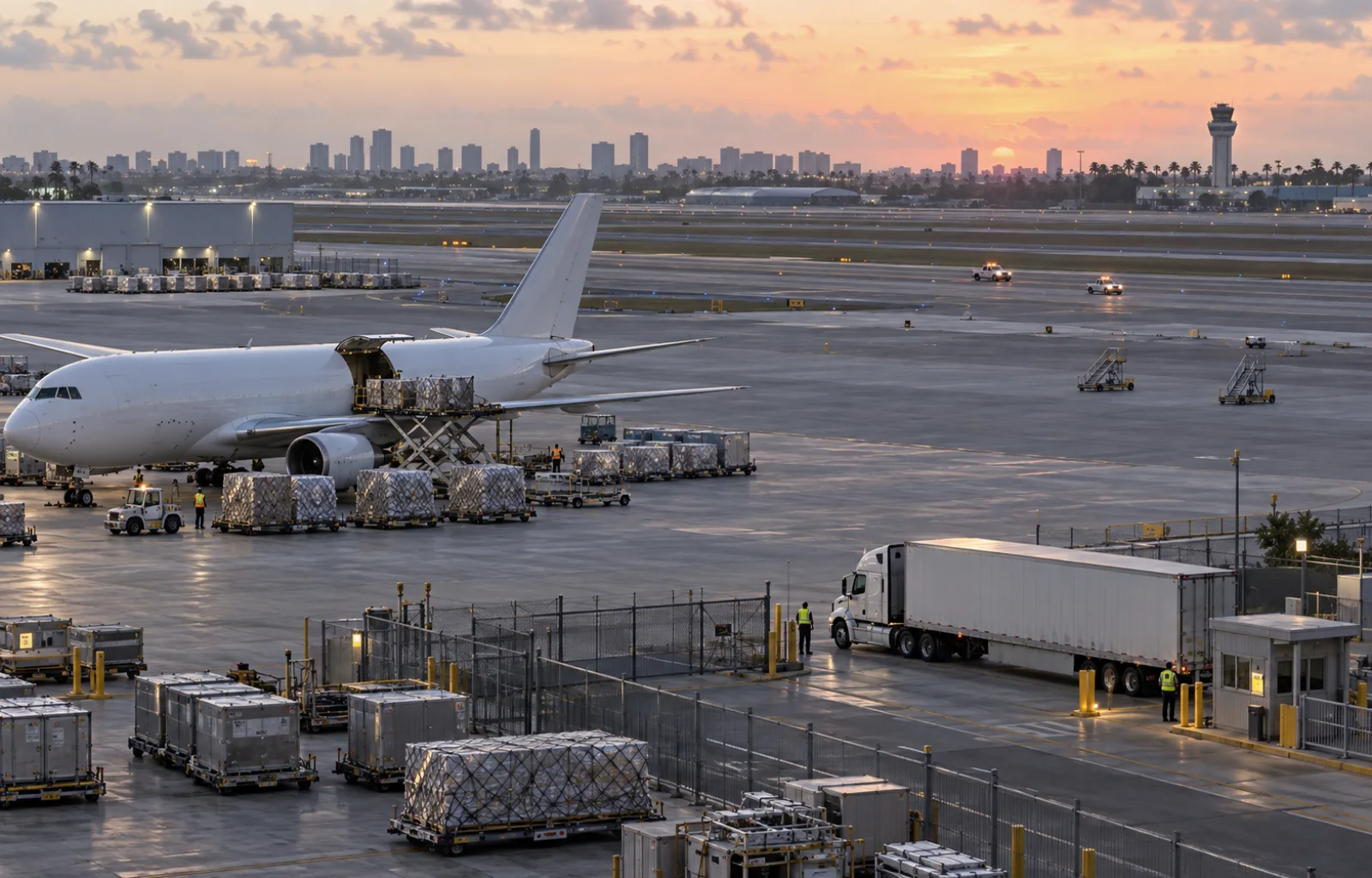
Miami International Airport entered September 8 with two of its four runways closed. The airport's public notice says cancellations continued because aircraft and crews had not arrived, but it does not publish a cargo-specific delay measure or promise a recovery time for individual shipments.
The operating constraint follows the September 6 overrun of 21 Air Flight 7598. The Federal Aviation Administration's preliminary statement identifies the aircraft as a Boeing 767-300 cargo jet inbound from Puerto Rico's Luis Muñoz Marín International Airport and says the FAA will investigate. Miami-Dade County's September 7 statement acknowledged people who died and were injured in the crash and the families affected. The human loss comes first; the cause and any safety conclusions remain matters for investigators, not for an operations desk to infer.

The wider freight significance is measurable. MIA describes itself as the United States' leading airport for total freight and international freight. It reports 3.4 million tons of freight in 2025, with 85% moving internationally, and says more than 35 all-cargo carriers use the gateway. A runway constraint there can touch many carrier schedules and ground handoffs even though it does not mean every cargo movement is delayed.
That distinction matters for dispatchers and customers. The airport's general notice addresses runway availability and cancellations; it does not identify which freighters, warehouses, truck docks, customs releases or recovery flights are affected. A national gateway alert is therefore a reason to verify a shipment, not evidence to change every Miami appointment or promise a new delivery date.
FreightNews infers that the most exposed handoffs are those with little slack between aircraft availability, warehouse recovery, customs or agency release, and the drayage appointment. The exposure still depends on the booked carrier, flight, commodity, warehouse, connection and whether the freight has physically reached the pickup point. Public runway counts cannot answer those shipment-level questions.

Air and ground teams can use one shared exception record: airway bill, operating carrier, planned and actual flight status, recovery location, release status, warehouse availability, free-time clock, truck appointment, driver contact and customer promise. A forwarder or carrier confirmation should carry a timestamp and named source so yesterday's status does not become today's instruction.
Alternate gateways or emergency truck moves should remain shipment decisions. Before rerouting, confirm uplift or transfer capacity, customs handling, special permits or temperature controls, warehouse acceptance and the full ground-mile tradeoff. The disciplined response to a nationally important airport constraint is narrow and current: verify the flight, verify the freight, verify the dock, and update the delivery plan only from confirmed status.