
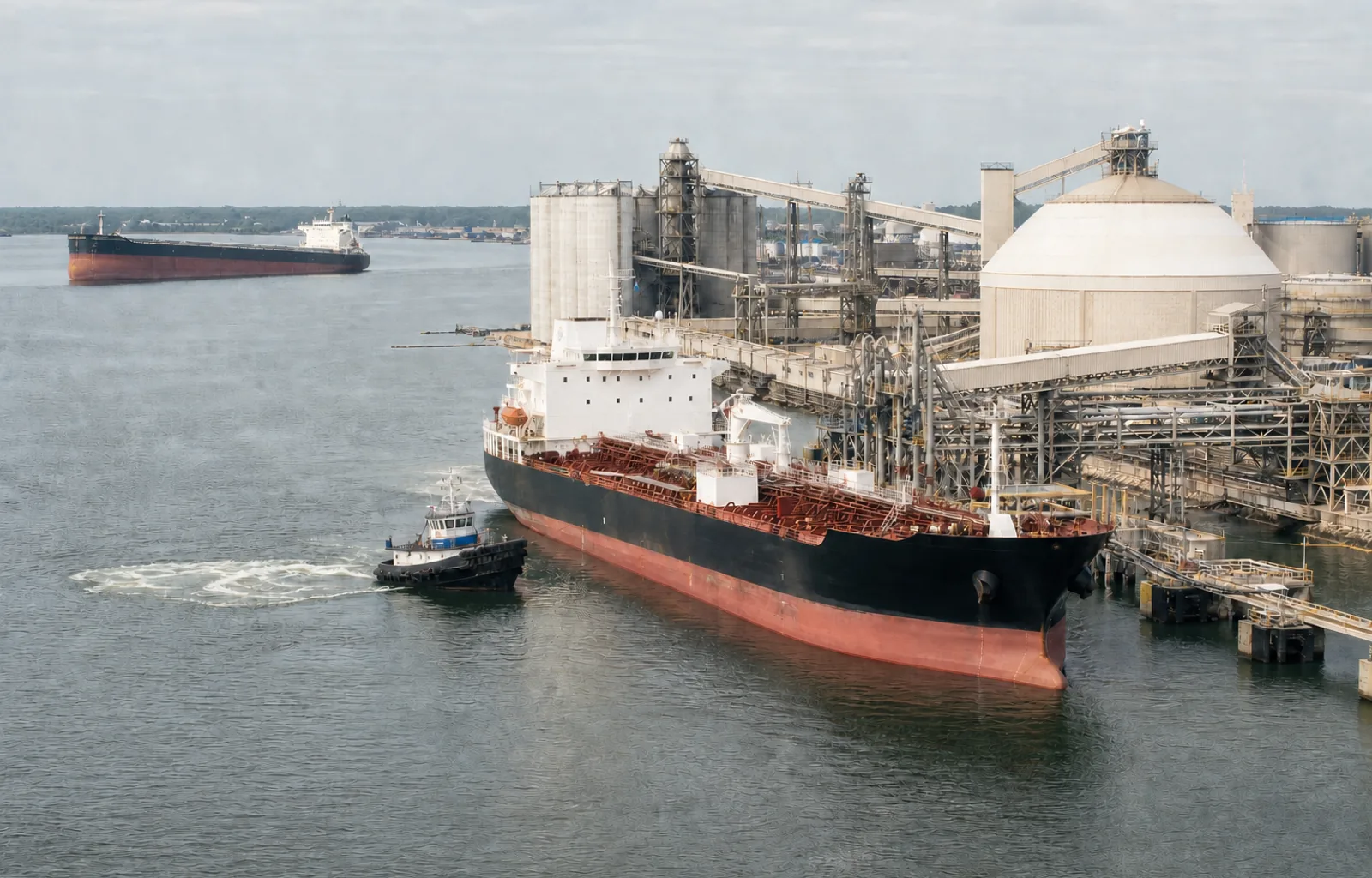
A federal coastwise-shipping waiver for energy and fertilizer cargoes has been extended for another 90 days, but its next phase is narrower than a blanket extension. The U.S. Department of Agriculture's August 13 Grain Transportation Report says the window now runs until mid-November and allows foreign-flagged vessels to carry covered cargo between U.S. ports.
USDA says voyages will now be considered case by case, including whether a Jones Act-eligible vessel is available. That changes the planning question. A longer calendar window keeps the waiver mechanism open, but it does not by itself approve a particular ship, cargo, origin, destination or sailing date.
The underlying coastwise rule remains in place. Federal law generally reserves merchandise movement between U.S. points to vessels that satisfy U.S. build, ownership and coastwise-endorsement requirements. Separate federal authority allows navigation-law waivers under specified national-defense and vessel-availability findings; the current program operates through that exception rather than rewriting the rule.
The waiver has already supported material cargo flow. USDA reports that, based on Maritime Administration submissions through August 12, 217 voyages had used it for products including crude oil, gasoline, renewable fuels and diesel. The agency also counted nearly 150,000 metric tons of anhydrous ammonia, plus shipments of liquid urea fertilizer and monoammonium phosphate.
 Discover Pro FleetSync - TMS
The market inference is that the extension preserves an additional coastwise capacity option while the case-by-case gate can leave timing less certain than a blanket authorization. It does not prove that domestic vessel capacity is unavailable on every route, that all waiver requests will succeed, or that marine cargo will automatically move to trucks, rail or pipeline when a request does not.

Energy and fertilizer shippers should build the voyage file before promising the handoff. Confirm the current waiver status, vessel qualification or nonavailability record, cargo eligibility, terminal berth, storage space, product compatibility, inspection requirements and the inland mode on each side of the port. A sailing approval without a workable terminal and delivery plan is not usable capacity.
Carriers and brokers serving the inland leg should keep conditional volume out of the committed forecast until the marine decision and terminal schedule are firm. They can still prepare alternates: identify tank, hopper, dry-bulk or specialized equipment requirements; map legal and safe staging; reserve communication owners; and price the dwell, repositioning and cancellation exposure separately from line haul.
The extension is meaningful because hundreds of voyages have already used the waiver. Its narrower administration is equally meaningful because the governing question is now the specific voyage, not merely the date on the calendar. Freight plans should carry both facts at the same time.