
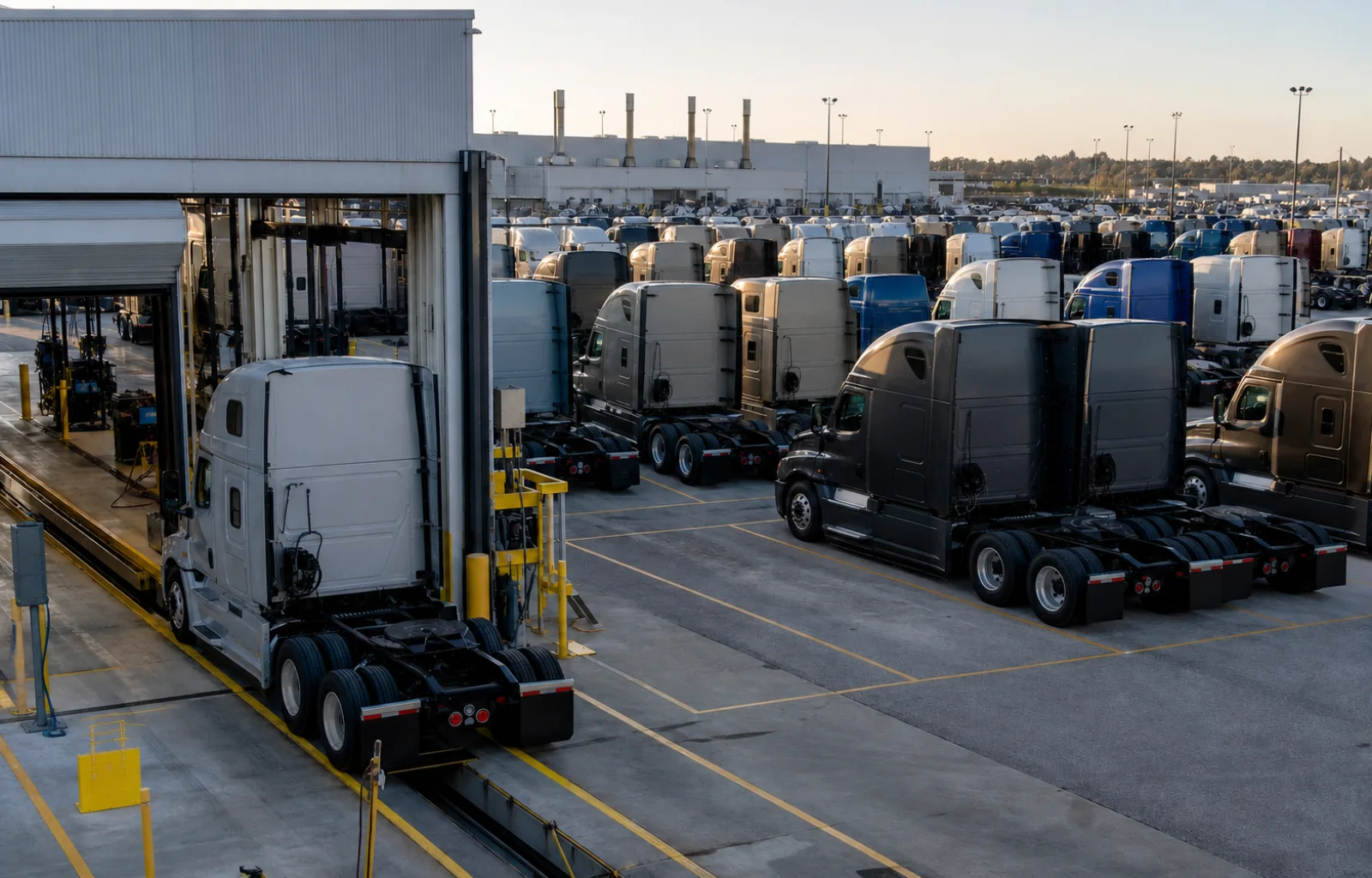

North American Class 8 truck orders slowed in July, but the drop arrived in a production calendar with little room left. ACT Research estimated 22,100 preliminary net orders, up 68% from July 2025 while down 30% from June on a seasonally adjusted basis. FTR Transportation Intelligence separately estimated 22,000, down 31% from June and up 75% year over year.
The small difference between the two estimates is a reminder that preliminary industry counts are not exact fleet purchase records. Both point in the same direction: July was much stronger than an easy year-ago comparison but cooler than June. Neither result shows how many units will be built, delivered or placed in service on a particular date.
Analysts at both firms tied the sequential decline partly to the ordering window rather than a sudden collapse in equipment demand. ACT said Class 8 backlogs were effectively full for 2026 and that customers were running into limited build slots. FTR said calendar-year production was essentially committed while manufacturers had not yet opened 2027 orderboards.

That constraint changes how a fleet should read the headline. An order can enter the market only when a manufacturer is willing to quote a slot, specification and price. A lower monthly count may therefore reflect the availability of sellable production as well as customer appetite. It does not prove that replacement demand, freight conditions or financing pressure improved.
The next model year adds a policy variable. EPA published proposed amendments in July for model-year 2027 and later heavy-duty engines, including possible nonconformance penalties for certain engines and changes to warranty, useful-life and diesel-exhaust-fluid inducement provisions. The proposal is not a final rule, and its eventual requirements and manufacturer pricing can affect when 2027 orderboards open and what fleets are offered.

FreightNews infers that the equipment market has shifted from asking only how many trucks carriers want to how many configured slots manufacturers can sell with known 2027 economics. That is an interpretation of the preliminary order data and analyst comments, not evidence that every OEM is sold out or that every fleet is planning a pre-buy.
Fleet capital teams should separate a reservation from a replacement plan. Track the intended trade cycle, maintenance exposure, financing terms, deposit rules, cancellation rights, estimated build week, engine family, model-year designation and any price adjustment tied to regulatory compliance. A national order total cannot answer those contract questions.
The same discipline applies to capacity planning. Ordering a tractor does not create freight, a qualified driver or a profitable lane. Replacement units can lower maintenance risk without expanding the fleet, while growth units require dependable demand and operating support. Order timing should stay connected to the purpose of each unit rather than to the year-over-year percentage alone.
The next useful evidence will be final July data, 2027 orderboard openings and the conversion of today's backlog into production. If slots open with firm specifications and pricing, order counts can become easier to interpret. Until then, July's 22,000-unit neighborhood is best read as demand meeting a constrained calendar, not as a clean vote on the entire freight cycle.