
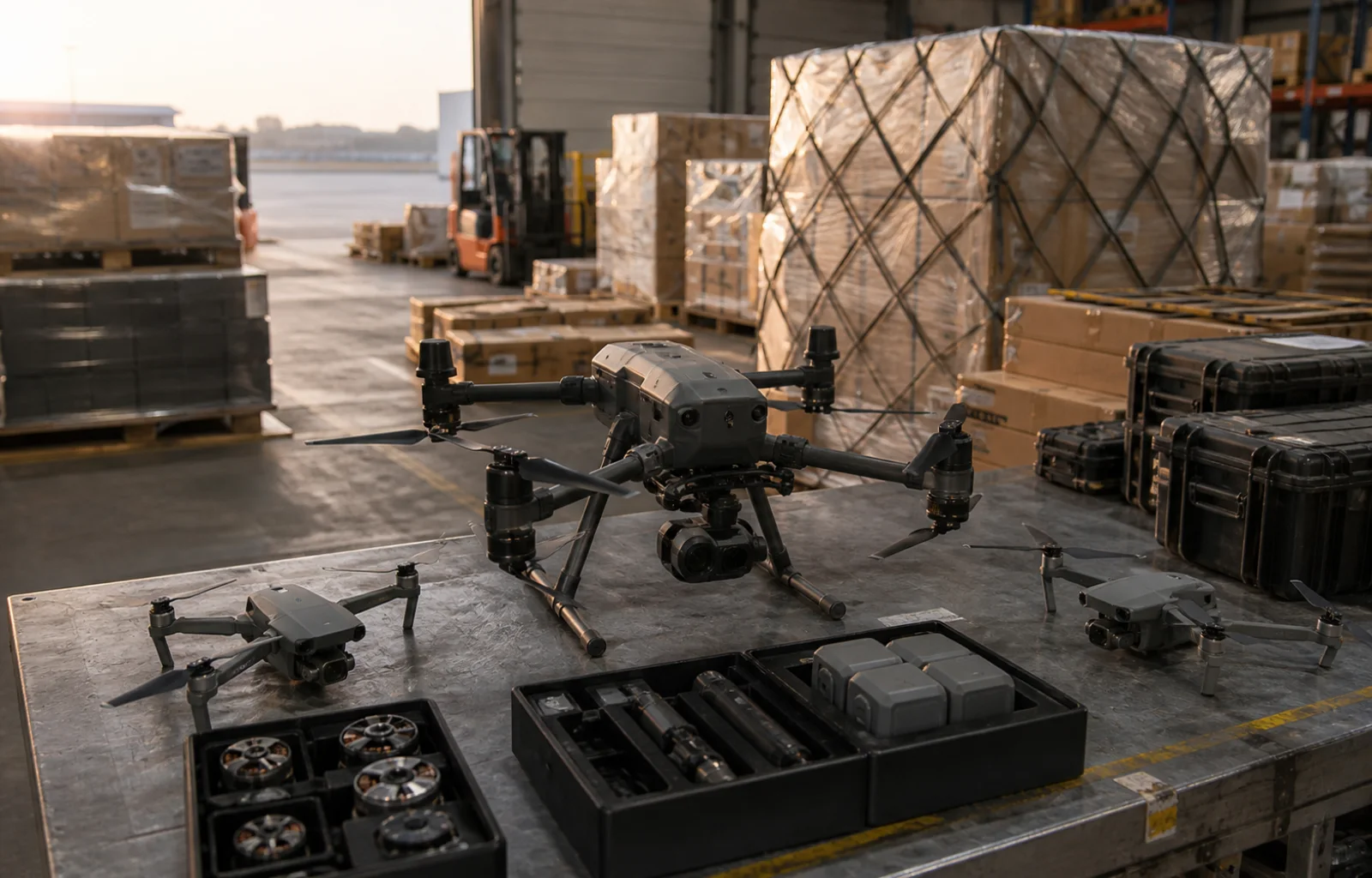

A new Section 232 tariff schedule puts two dates on the procurement calendar for imported unmanned aircraft systems and parts. The presidential proclamation published August 19 says listed UAS and docking stations enter the first duty phase on September 3, while a separate set of listed components enters a later phase on February 9, 2027. Those are entry dates, not factory-order or vessel-departure dates.
The first phase is not one flat rate for every drone. The proclamation sets a 100% additional duty for listed UAS with a maximum take-off weight above 25 kilograms, UAS that integrate thermal imagers, docking stations and certain critical components identified in its annexes. Listed UAS at 25 kilograms or less face a 25% rate. The September 3 threshold covers consumption entries and warehouse withdrawals for consumption made from 12:01 a.m. Eastern onward.
Country and content rules can change that headline rate. Qualifying products of Japan, South Korea, Taiwan, Switzerland, Liechtenstein or an EU member are capped at a total 15% duty, while qualifying products of the United Kingdom are capped at 10%. Those ceilings require importer certification that substantially all critical components and technology come from the United States or named partner economies, and Commerce must establish the determination process.

The component clock runs later. The proclamation assigns a 25% duty to the products listed in Annex III beginning February 9, 2027, describing the 180-day interval as time to encourage domestic production. Commerce may later add UAS components if it finds that their imports undermine the action, so a current classification review is a starting point rather than a permanent scope guarantee.
The proclamation also creates conditional relief paths rather than a blanket domestic-manufacturing exemption. Commerce is directed to establish an onshoring program for approved new U.S. facilities, with duty-free import volumes tied to the completed facility's reasonably anticipated output while construction is underway. Certain products on specified federal approved-product lists as of September 2 receive the later 180-day effective date, subject to agency identification of the qualifying companies and products.
For freight markets, the immediate effect is a landed-cost and timing problem before it is a volume forecast. Importers must map purchase orders to tariff classification, country of origin, certification status, foreign-trade-zone treatment and the date merchandise will be entered. FreightNews infers that unresolved scope or eligibility could change mode, warehouse and inventory decisions, but the proclamation does not estimate import volumes, carrier demand or final selling prices.
The duty is generally additional to other taxes, fees and charges unless the proclamation says otherwise. It also requires affected foreign-trade-zone merchandise admitted on or after the relevant effective date to use privileged foreign status, except goods eligible for domestic status. Companies should therefore avoid treating the 25% and 100% figures as complete landed-cost quotes without a product-specific customs review.
Procurement and logistics teams should build an item-level exception file now. Record the HTSUS classification, maximum take-off weight, thermal-imaging configuration, docking-station status, component origin, current inventory location, expected entry date and any certification or federal-list basis for reduced treatment. Customs brokers can then review the evidence before freight reaches the entry queue rather than reconstructing it after arrival.

Transportation and warehouse operators that use drones for inspection, mapping, inventory, security or delivery should separate equipment exposure from operating exposure. The proclamation raises the potential cost of covered imports and components; it does not prohibit commercial UAS operations, change airspace rules or guarantee that domestic replacements will be available on a particular schedule. Replacement cycles and maintenance spares need their own evidence.
The market signal is a staged supply-chain reset, not a single tariff-day shock. September 3 matters for listed complete systems and selected equipment, February 9 matters for the later component list, and certification or onshoring decisions can create different rates for otherwise similar procurement plans. The freight desk should price and route the actual entry file, not the headline percentage alone.