

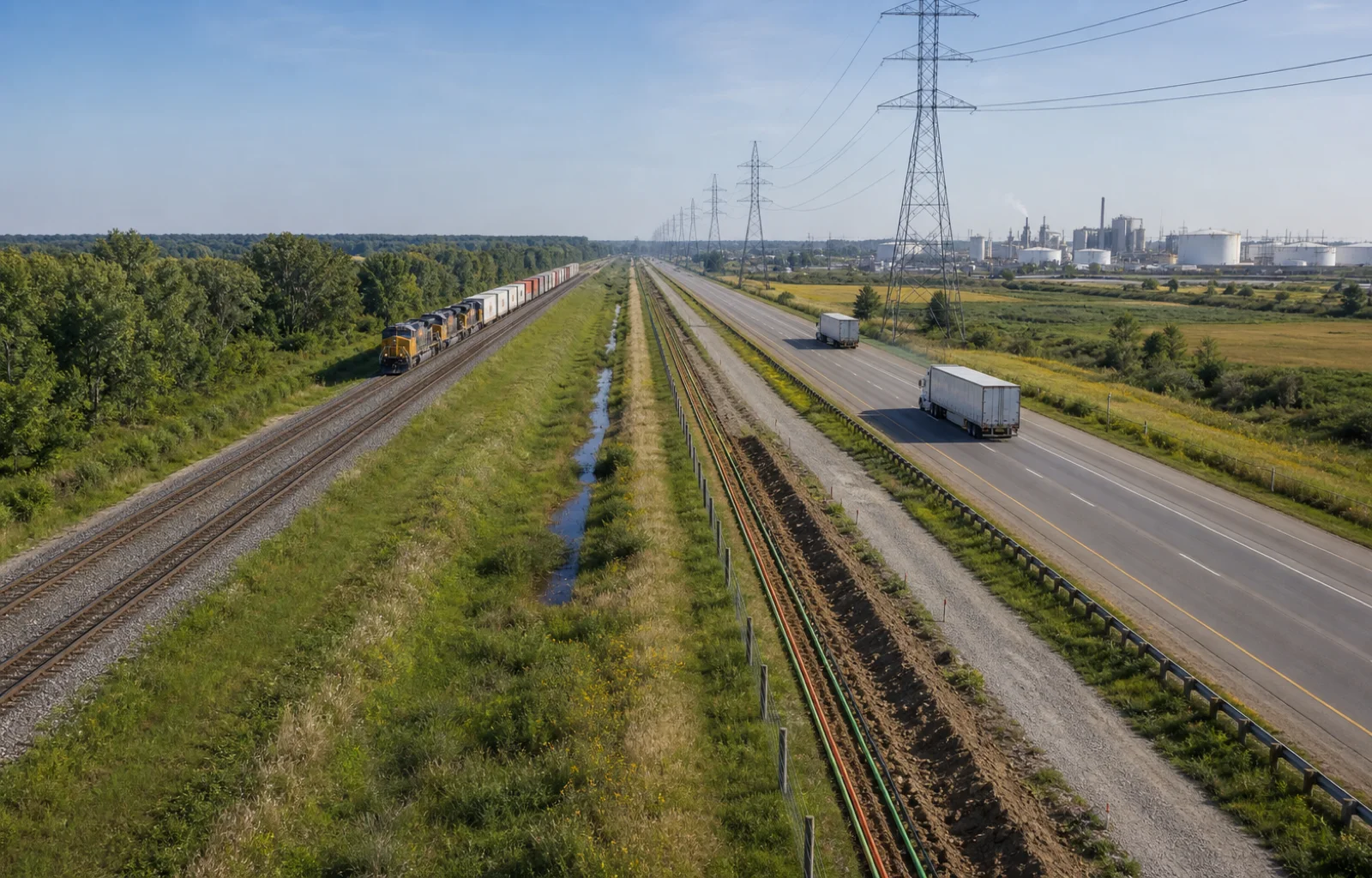
The U.S. Department of Transportation is asking how highway and rail rights-of-way could host more utility infrastructure without surrendering their transportation role. Its August 18 request for information introduces the proposed America's Great Corridors of Commerce model and asks for public comments by September 12. The notice starts a design discussion; it does not select a corridor or authorize construction.
DOT envisions a voluntary process in which a state transportation department or railroad right-of-way owner proposes a corridor for power, communications, water or other linear infrastructure. A private corridor manager could design, build, finance, operate and maintain dedicated subsurface channels or related facilities, then lease space to utilities under a concession that the notice says would typically run 30 to 50 years.
The department intends to designate up to five corridors per year for federal technical assistance focused on planning, siting, permitting and financing. It anticipates a later annual request for expressions of interest and says longer multistate corridors with market demand, readiness, financial feasibility and stakeholder support could receive priority. Only designated corridors would get specialized federal concierge services.

That proposed designation is not a grant award. The RFI says underground conduits might qualify for federal loan programs in some cases, while utilities or private companies could finance other parts. It also says DOT may or may not issue a future request for expressions of interest. No owner should treat today's notice as a funding commitment, permit, lease or construction schedule.
The transportation constraint is explicit even if the engineering is not final. DOT asks commenters to address construction and operating safety, maintenance access, technical feasibility, liability, permitting, cross-border coordination, revenue sharing and market limits. The freight inference is that colocation can create lease value only if utility work, emergency access and long-term maintenance remain compatible with track, highway, drainage and right-of-way operations.
Railroads, state DOTs, utilities and freight users therefore have different evidence to contribute. Right-of-way owners can identify clearance, access-control and lifecycle-maintenance limits; carriers and terminal operators can describe closure windows, incident response, oversize movements and network choke points; utilities can quantify demand, construction methods and the value of shared trenching or tunneling. The RFI asks for those tradeoffs before DOT defines the designation process.
Network teams should keep the policy watch separate from active project planning. Map which routes and facilities depend on likely candidate corridors, identify maintenance and emergency-access conflicts, and record the operational data needed to evaluate a future proposal. Do not issue detours, reserve capacity or promise service changes until a specific owner, location, design and schedule exist.
America's Great Corridors of Commerce could eventually turn some transportation rights-of-way into shared infrastructure and recurring-revenue assets. On August 18, however, the actionable item is a comment deadline and a set of unresolved design questions. The freight value will depend on how the final model protects transportation performance while allocating cost, access and risk.