
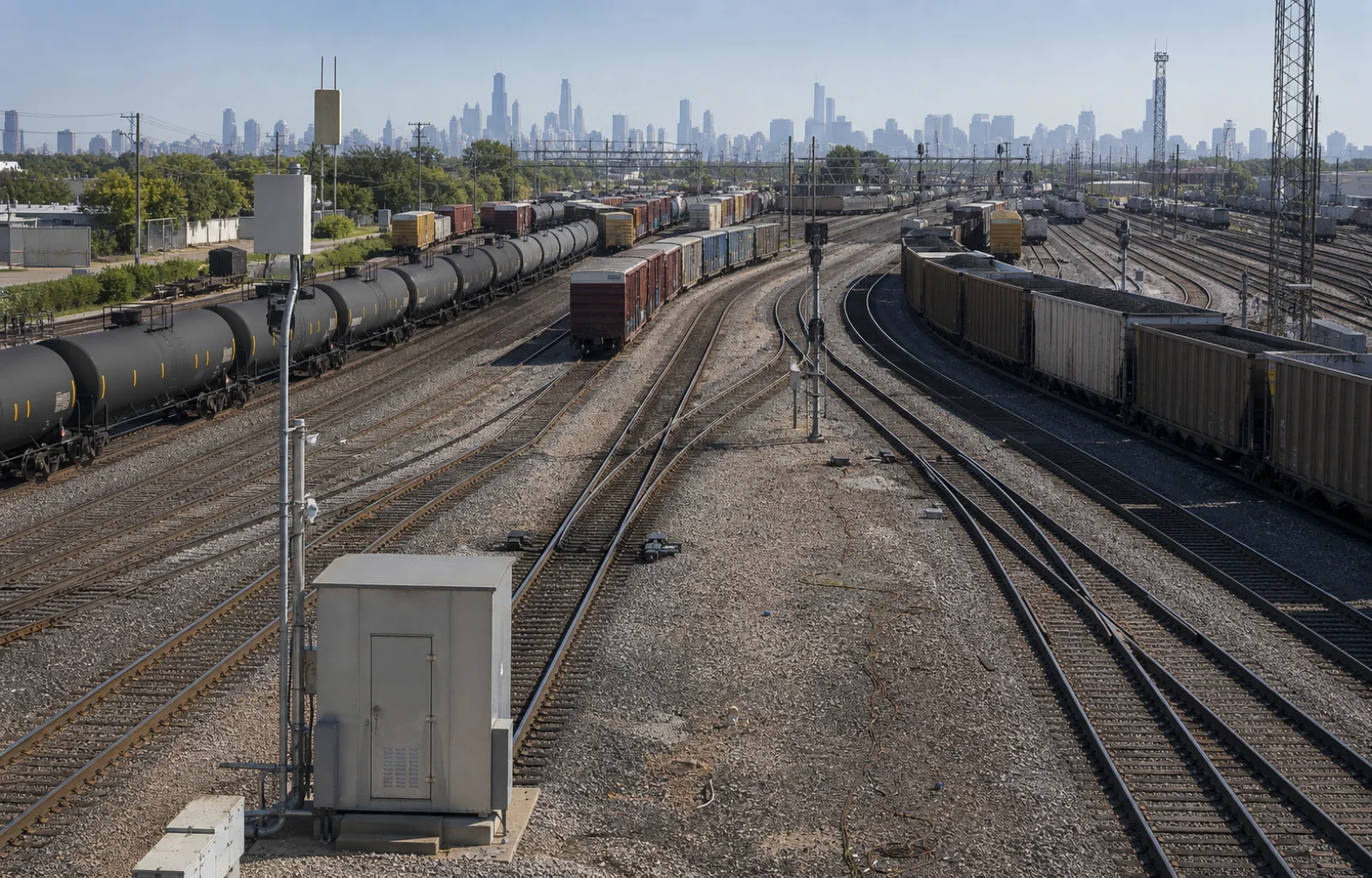

The Belt Railway Company of Chicago is asking the Federal Railroad Administration to approve four planned maintenance windows for the operational-technology network supporting its positive train control back office. FRA published the request for comment on August 12 after Belt Railway submitted the amendment on August 6; comments are due September 1.
The proposed windows are Sundays from 8:00 a.m. to 5:00 p.m. local time on September 27, October 4, October 11, and October 25. Belt Railway says it chose Sundays to reduce safety risk by targeting the day with the least commuter traffic on its operating network. The filing says FRA would receive at least seven days' notice if a date changes.
The work is divided by function. The September window centers on internet redundancy testing, core-switch improvements, remote backlink connectivity, logging, virtual-network cleanup, West Yard uplinks, and low-risk housekeeping. The October windows cover routing, convergence, spanning-tree, access-control, and other network changes, with the final date reserved for deferred work and retesting issues found during the first window.
Belt Railway does not plan to disable its back-office subsystem and says it will take steps to avoid service interruptions. It nevertheless identifies the possibility of brief communication losses between the back office and onboard I-ETMS equipment and says it does not expect an interruption to exceed 20 minutes.

If communication is lost, the filing says a train may be unable to initialize to the Belt Railway back-office server, dispatched territory may be unable to send or change authorities and restrictions in the PTC system, and a train operating with active PTC may transition to a disengaged state or require PTC to be cut out. These are identified contingencies, not a statement that any outage or freight delay will occur.
The railroad proposes to handle an interruption through the enroute-failure provisions of 49 CFR 236.1029(b), its own operating rules, and host-railroad rules. It says crews would continue under the underlying methods of operation, a note would be placed in the Daily Operating Bulletin, and no other planned work would be scheduled during the events. The filing does not propose an added speed restriction, citing Belt Railway's 25 mph maximum speed.
Tenant railroads would receive at least seven days' notice through the Interoperable Change and Configuration Management Board process. FRA can approve, approve with conditions, or deny the amendment. Until that review is complete and operating notices are issued, customers and motor carriers should not treat the requested windows as a confirmed service disruption.
The practical freight implication is an inference: drayage and intermodal teams with Chicago handoffs may want the four dates on their planning calendars, then check the serving railroad's actual notices, terminal appointments, cutoffs, and availability before moving a truck. A PTC communications contingency does not establish a terminal delay by itself, but advance monitoring gives dispatch time to separate a real exception from routine congestion if conditions change.