
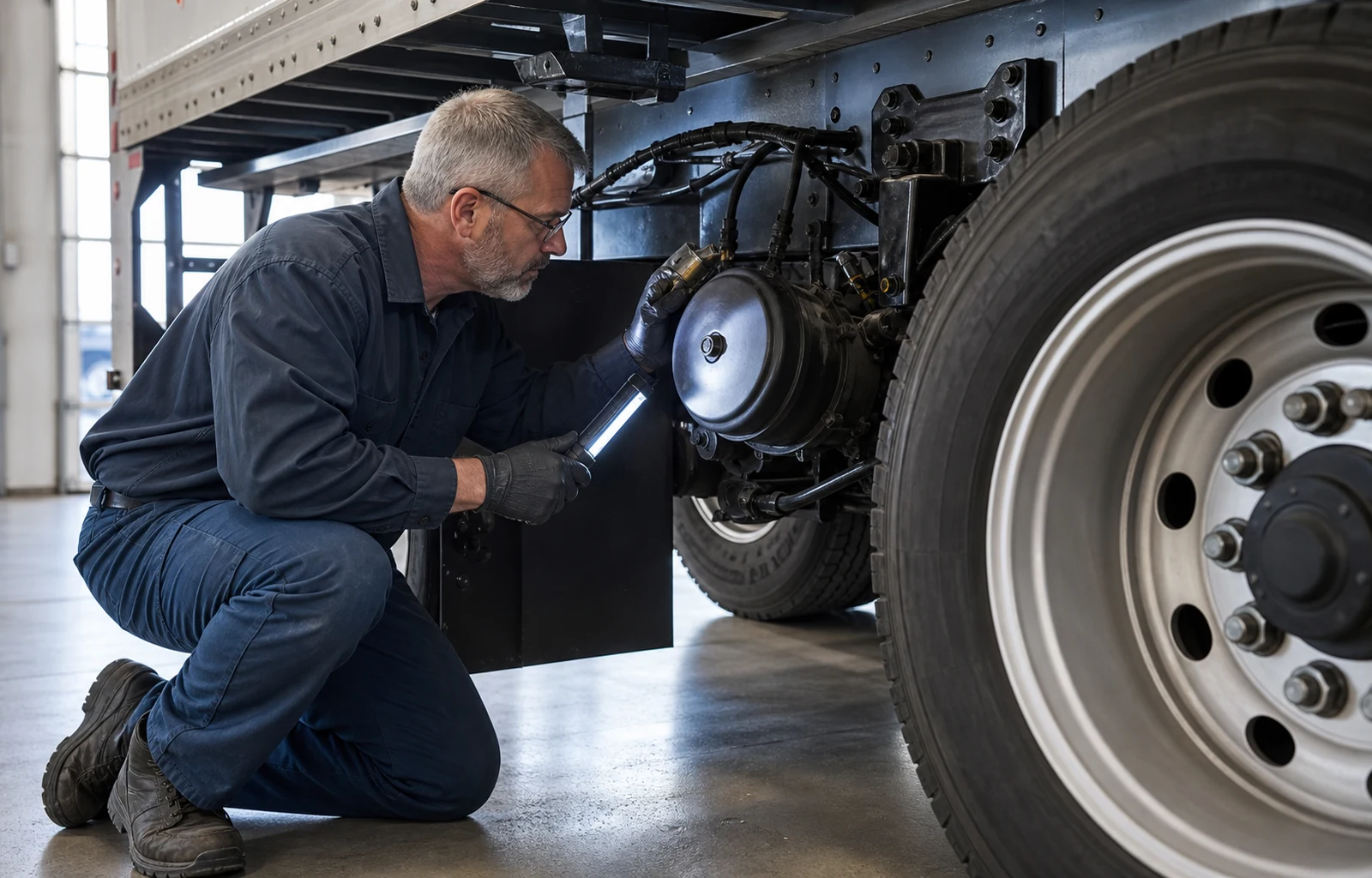

FMCSA’s 2026 outreach calendar lists Brake Safety Week for August 23 through 29. For a carrier, the remaining time is not an invitation to stage a one-week repair push. It is a chance to confirm that the normal inspection and maintenance process is producing safe equipment and retrievable evidence.
Start with unresolved driver vehicle inspection reports, open work orders, repeat brake complaints, and units approaching preventive-maintenance intervals. Prioritize patterns and safety-critical findings rather than pulling every tractor through the shop for the same superficial check.
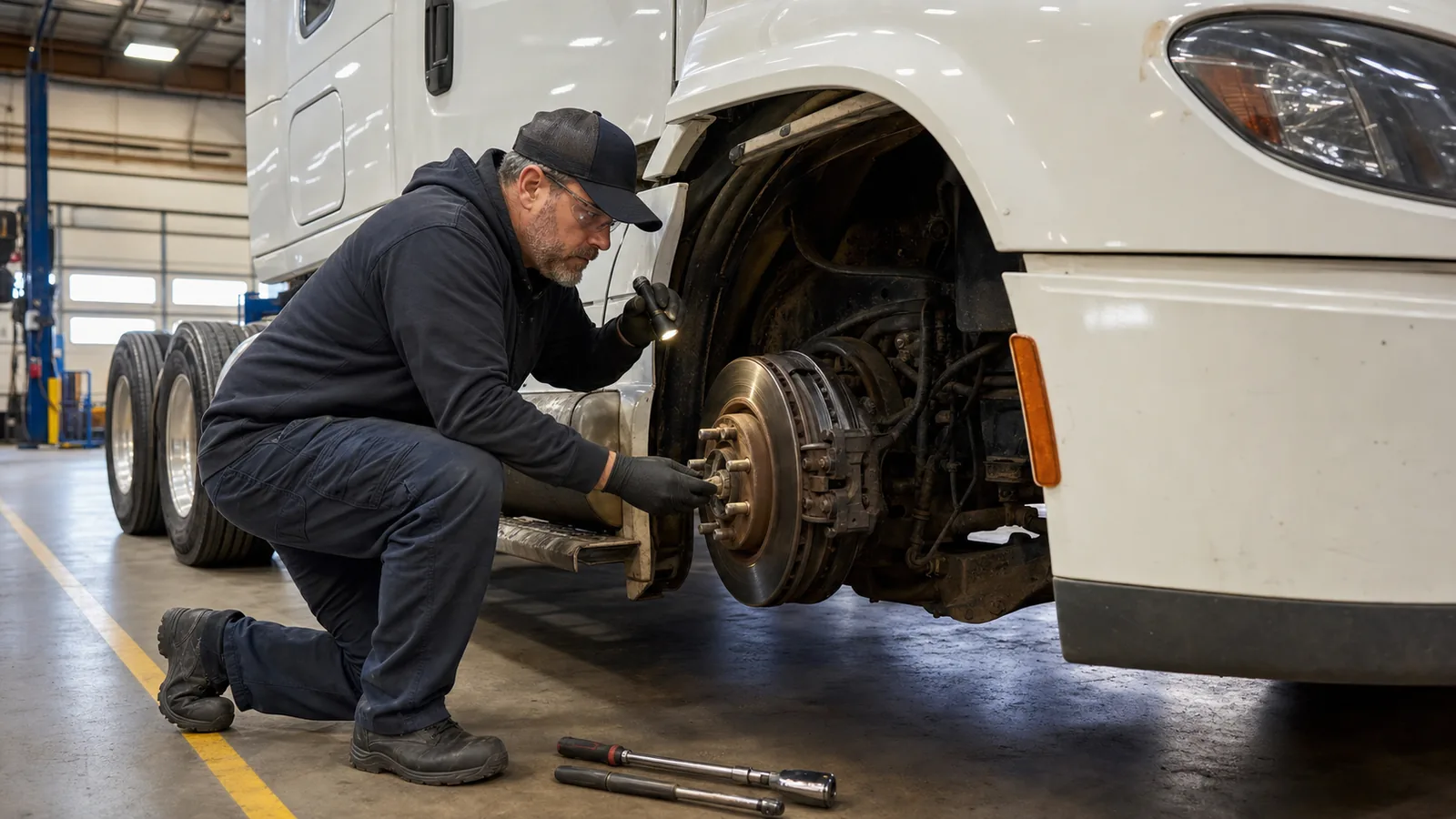
Technicians should inspect the complete system appropriate to the vehicle: components, adjustment, hoses and tubing, warning devices, air loss, drums or rotors, linings or pads, and signs of contamination or heat. The exact inspection must follow the fleet’s equipment and applicable requirements.
Parts availability can become the hidden constraint. Identify units that may need chambers, hoses, linings, drums, rotors, sensors, or related hardware and confirm supply before the inspection period creates a rush.

Drivers need a simple reporting path for changes in pedal feel, pull, warning lights, air behavior, stopping performance, or unusual heat and odor. A report that sits in a text message outside the maintenance system is easy to lose and difficult to prove was handled.
Maintenance records should show the complaint, inspection, finding, repair, technician, date, and return-to-service decision. A completed checkbox without the underlying work provides little operating insight.
The goal is not to prepare equipment to pass one roadside event. It is to use the concentrated attention as a check on whether defects are being found early, communicated clearly, repaired correctly, and kept from returning.