
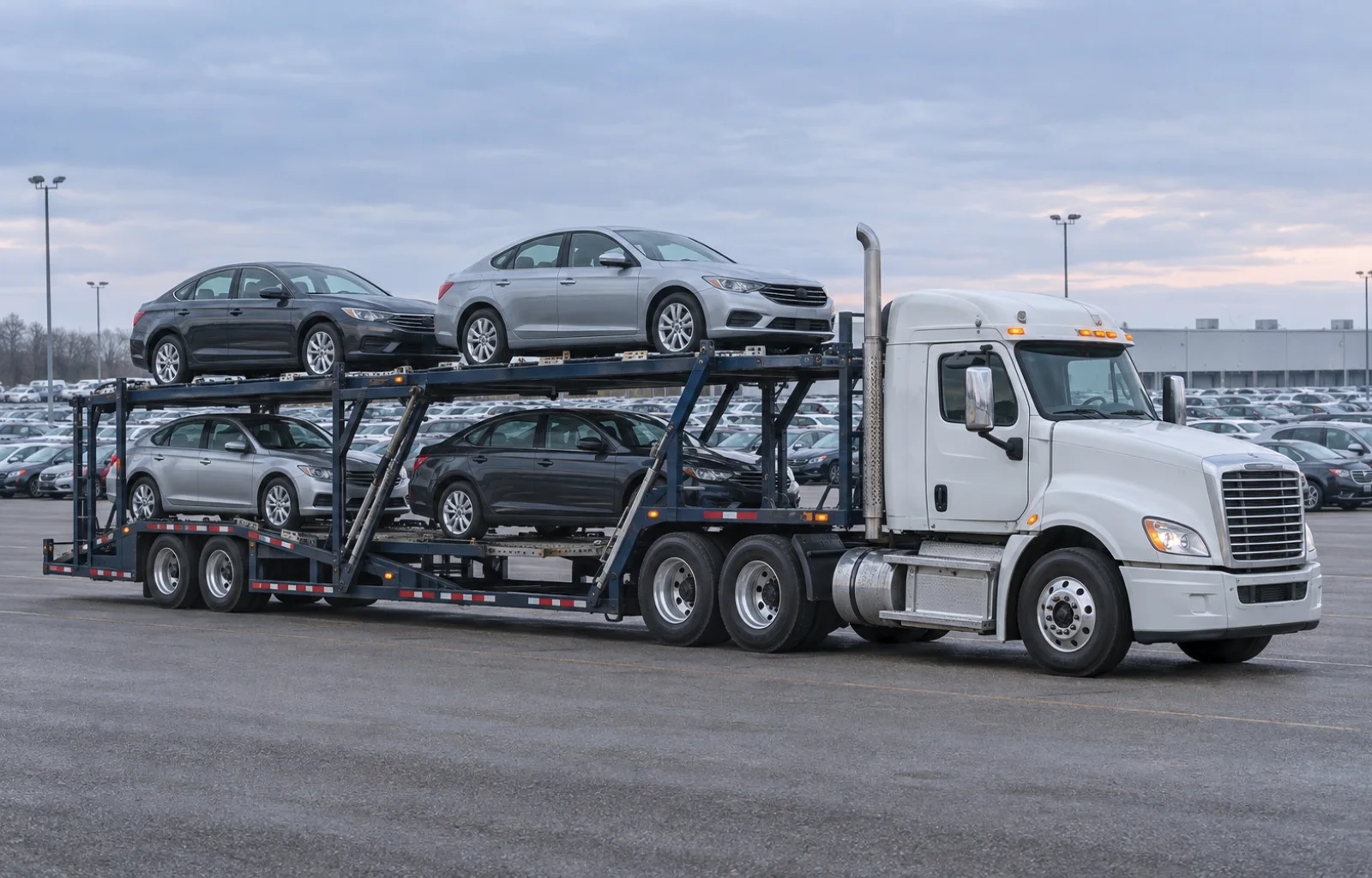

Proficient Auto Logistics delivered 38.6% more vehicles in the third quarter than it did a year earlier, and revenue rose 30.3% to $149 million. The profit picture differed sharply between the two sides of its business. Its company-driver segment swung to a loss, while its subhauler segment earned more. For finished-vehicle carriers weighing their own equipment against purchased capacity, the November 16 filing shows what can disappear inside a consolidated revenue figure.
The company-driver segment recorded a $2.67 million operating loss after a $3.22 million profit a year earlier. Subhaulers posted $6.40 million in segment operating profit, up from $4.03 million. Using the segment revenue and profit figures in the filing, FreightNews calculates a company-driver segment margin of about minus 4.0%, down from plus 7.7%, and a subhauler margin of 7.8%, up from 5.6%. These are calculated segment margins. Proficient separately reported a $3.87 million consolidated operating loss, which includes company-level costs.
An acquisition changed the size and composition of the network. Proficient says the addition of the Hansen & Adkins and MCL businesses drove the year-over-year revenue increase in both segments. Excluding the acquisition, the company reported fewer new-vehicle shipments and weaker dealership activity than a year earlier. Those comparisons qualify the delivery headline. A fleet using the report as a demand signal should check how much of its own growth came from new accounts or purchased operations before reading it as stronger volume on existing lanes.
The filing also shows where fuel moves through the two businesses. Proficient books fuel and fuel taxes in the company-driver segment and purchased transportation in the subhauler segment. It says it passes customer fuel surcharge revenue through to subhaulers in many cases and receives no surcharge on empty miles. Management identified fuel costs, insurance and truck expenses as contributors to the deterioration in the consolidated operating ratio. The filing gives readers no basis for assigning the entire company-driver swing to one cost.
For a carrier that uses both kinds of capacity, start with a repeat lane and match the same shipments, dates and service requirements. For company trucks, include repositioning miles, driver time, fuel, equipment and the expected cost of idle days. For bought capacity, check the carrier invoice and the fuel amount passed through, then add the cost of recovering missed loads or meeting short-notice orders. Give both alternatives the same customer revenue assumptions before comparing them.
A route with strong round-trip utilization can support a different capacity decision from a route that regularly sends specialized equipment home empty. The next useful comparison is the margin on comparable loads and the cost of keeping enough capacity available for the shipper’s schedule. Proficient’s quarter shows why a growing delivery count can coexist with a weaker result in the company-operated fleet.