
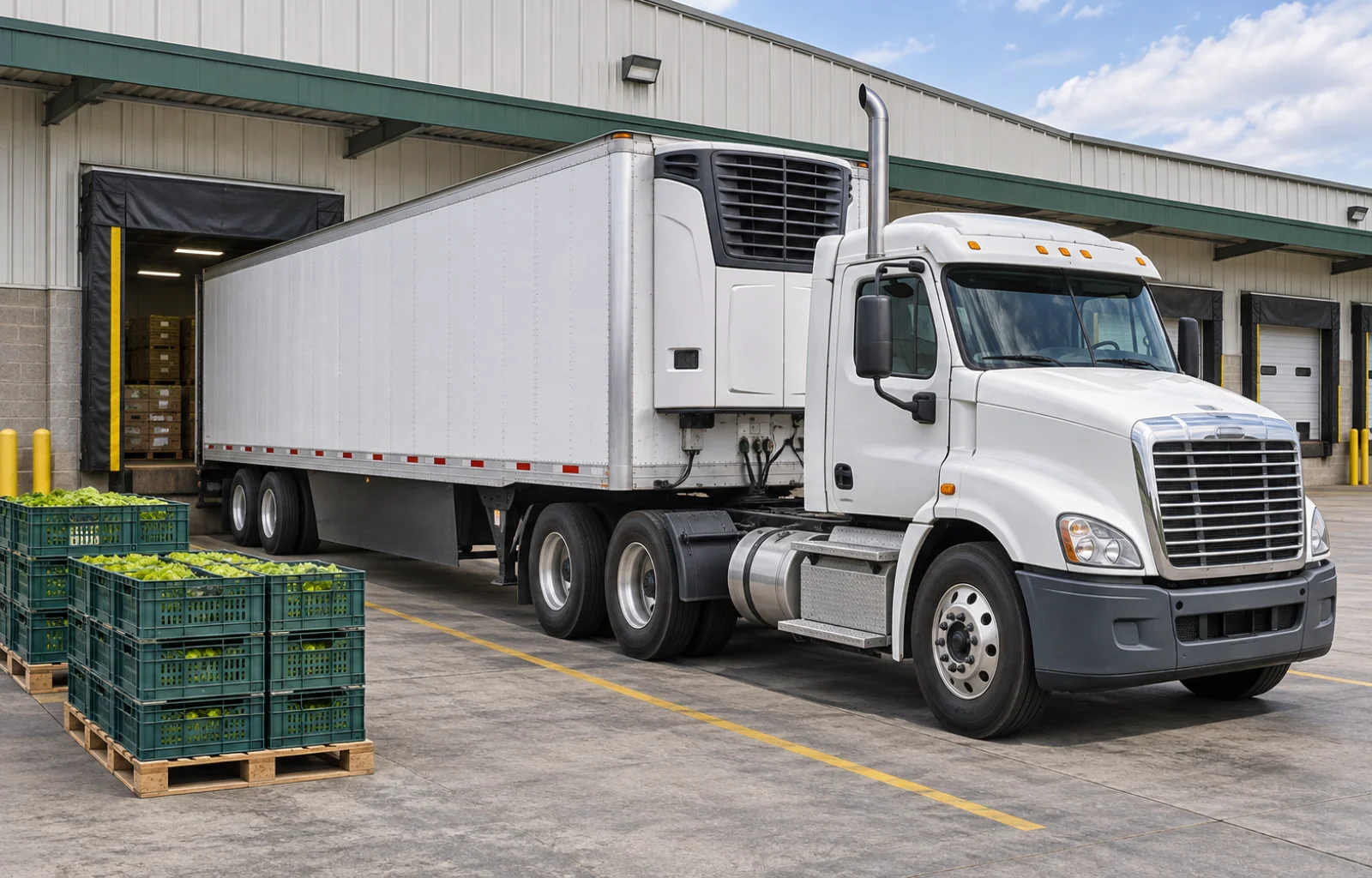
Four produce lanes into Chicago showed three different levels of refrigerated truck availability in the week ended November 17. USDA’s Agricultural Marketing Service reported a slight shortage for the apple and pear lane from Washington’s Yakima and Wenatchee growing areas and for a group of produce loads crossing through Nogales, Arizona. It reported a slight surplus for the South Texas crossing lane and adequate supply for the Georgia tomato lane. For Thanksgiving-week bookings, those prior-week readings give freight buyers a starting point for deciding which origins to call first.
The USDA data put Chicago-bound loads on the Washington lane at $7,400 to $8,800 per truck, and the Nogales lane at $5,500 to $6,400. South Texas crossings showed $3,600 to $4,600, and Georgia tomatoes showed $2,250 to $2,450. Those are the reported low and high spot rates for the origin and destination pairs. The listed distances run from 1,100 miles out of Georgia to 2,000 from Washington, and the loads represent different produce. The ranges provide four separate pricing references for one receiving market.
The two border lanes also illustrate why a crossing name matters on a tender. The Nogales listing covers commodities including cucumbers, peppers, squash and melons. The South Texas listing includes some of the same produce as well as items such as limes and tomatoes. Their Chicago availability readings differed by two steps on USDA’s five-point scale. Moving a pickup to a different gateway would require the freight to be available there and the shipper to approve the change. A lower truck quote alone gives a buyer no evidence that such a switch is feasible.
The dataset is a spot-market reference for reported produce moves. USDA’s scale runs from surplus at 1 to shortage at 5, with 3 indicating adequate supply. The rating gives the direction of the imbalance for the reported move without a truck count. Even a lane marked adequate can leave a particular pickup uncovered when several shippers need the same loading window.
 Explore the complete workflow
A practical use this week is to sort open loads by actual pickup district first, then check the receiving appointment and the carrier’s pickup commitment. Give the origins that showed tight availability an earlier confirmation call. Compare current quotes within each lane, using the same equipment, pickup timing and delivery terms, and establish which charges the quote covers. That gives dispatch a usable plan if a pickup slips into a different receiving window during the holiday week.