
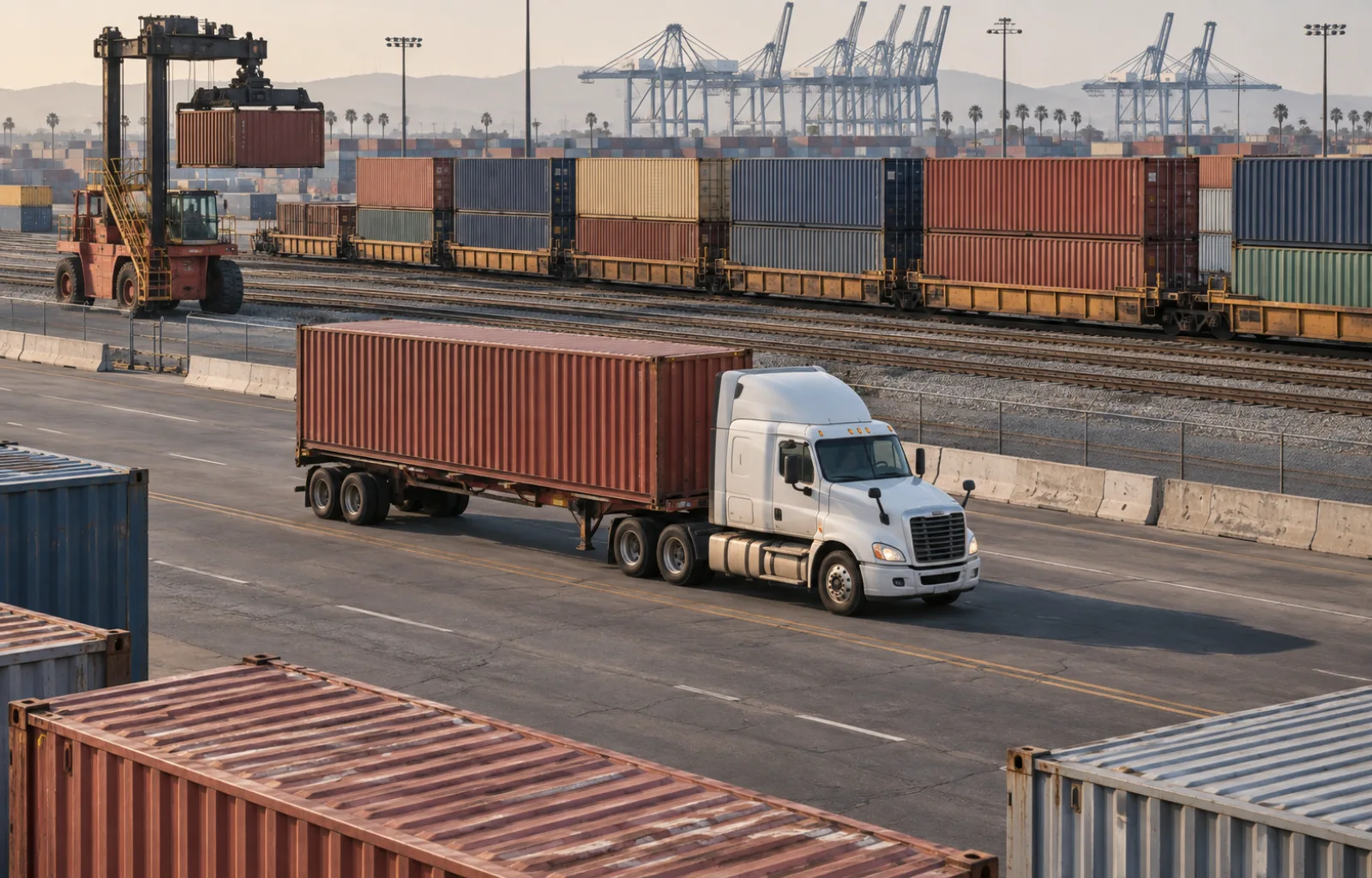

Import containers took longer to leave the Los Angeles and Long Beach marine terminals in October, whether they were headed for a local truck or a train. The Pacific Merchant Shipping Association reported November 16 that truck-bound boxes averaged 3.60 days at the terminals, up from 3.18 days in September. Rail-bound boxes averaged 8.16 days, up from 7.19. The extra wait was about ten hours for the truck group and twenty-three hours for the rail group, based on the published monthly averages.
For carriers serving the ports, the truck figure describes how long boxes stayed at the terminal between vessel discharge and loading for departure. Truck turn time measures the visit the truck makes to the terminal. A container can wait several days for pickup even if the truck that ultimately retrieves it gets through the gate quickly. Freight buyers who use one number to budget for the other can reserve labor for the wrong part of the move.
The same release matters inland. The rail figure stops at the marine terminal’s rail handoff. An inland carrier still needs the rail journey, the ramp’s release and a usable pickup window before committing a tractor. As a planning inference, a customs-cleared container that is still awaiting a train at the coast gives an inland dispatcher a reason to keep delivery capacity flexible and to refresh the receiving appointment when the ramp confirms availability.
Port throughput measures another part of the picture. Los Angeles alone reported 1,026,872 twenty-foot-equivalent units in October, its second-highest monthly volume, including about 538,620 loaded import units and 373,271 empty units. Those counts measure equipment moved at one port. The dwell figures cover both ports and describe elapsed time for containers in two groups. A million-unit month can coexist with a longer wait, and the total includes boxes that never become loaded import pickups.
For the local dray move, dispatch can keep separate timestamps for vessel discharge, terminal release and the appointment. The Port of Los Angeles publishes container-tracking and terminal gate resources, including appointment and chassis information. Confirm a specific box is available and that the gate slot and equipment match before assigning a driver. If a slot slips, report whether the box lacks a release or the terminal lacks a workable appointment. Those delays require different calls.
For an inland pickup tied to the same gateway, track when the box is loaded to rail and, separately, when the inland ramp releases it. That gives a shipper a better basis to move a warehouse booking or defer a truck tender. October’s averages explain why the two handoffs warrant separate checks, while the current container record determines the next move.