
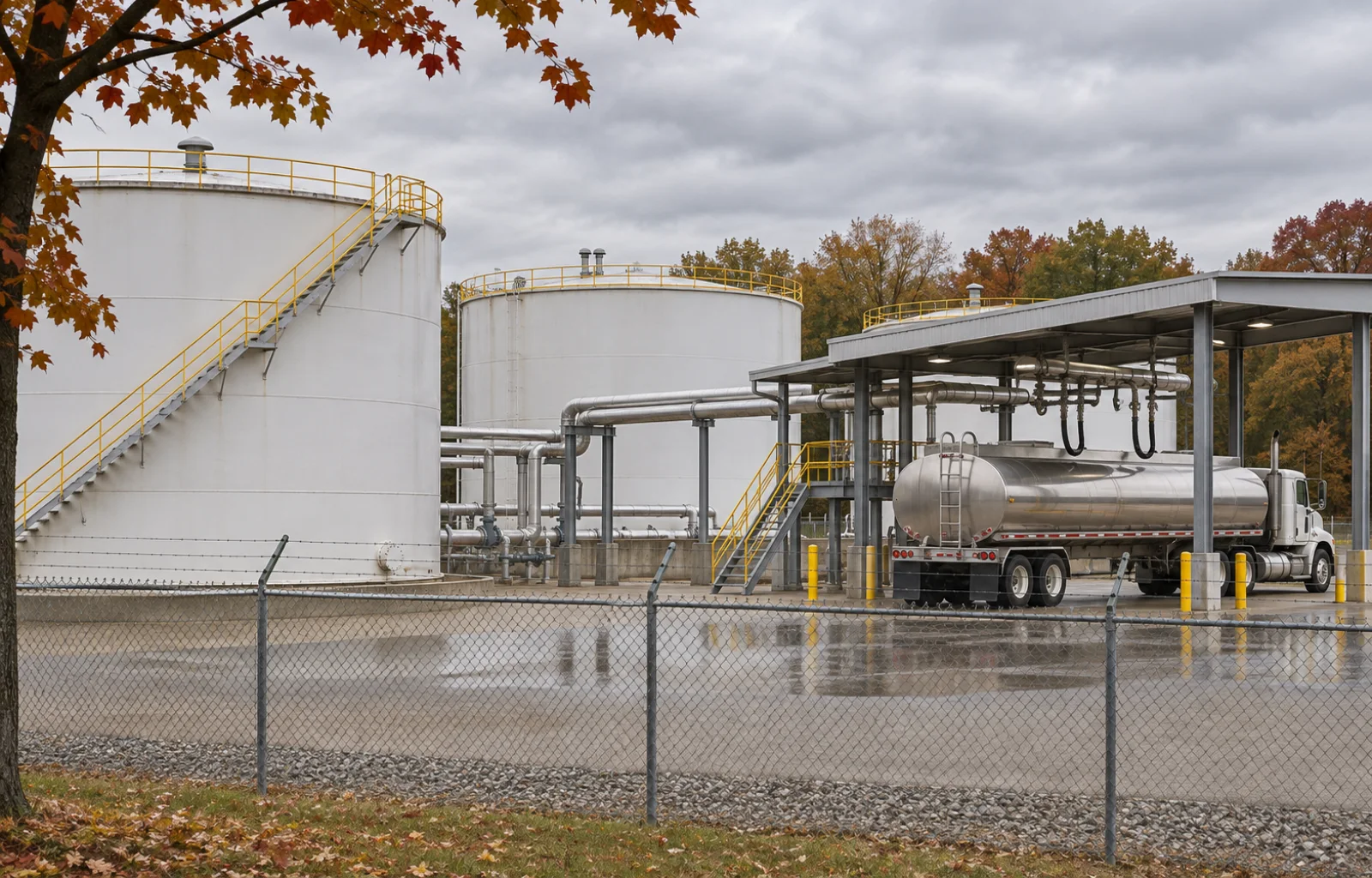
Petroleum wholesalers supplied about three-quarters of September’s increase in U.S. wholesale sales dollars, a sharp change from the durable-goods-led gain reported for August. The Census Bureau’s November 9 release, verified November 11, gives carriers a reason to separate fuel-related turnover from the broader distribution market before treating the 2.8% national sales increase as a general freight-demand acceleration.
FreightNews calculates from the seasonally adjusted Table 1 levels that petroleum sales rose $17.527 billion, from $93.427 billion in August to $110.954 billion in September. Total merchant-wholesaler sales increased $23.232 billion, from $816.891 billion to $840.123 billion. Petroleum therefore accounted for 75.4% of the net monthly dollar increase. This is a contribution to a change, not petroleum’s share of all wholesale business.
Removing petroleum from both monthly totals leaves $723.464 billion in August and $729.169 billion in September: an increase of $5.705 billion, or about 0.8%, by FreightNews calculation. The remaining market still grew in dollars. But its pace was substantially slower than the headline, and the calculation does not turn the rest of wholesale trade into a single equipment market. A dry-van distributor and a fuel hauler can face different orders behind the same national report.
The sector detail reinforces that distinction. Petroleum sales rose 18.8% in the table, while drug wholesalers’ sales fell 1.5% and grocery sales edged up 0.1%. Durable-goods sales increased 1.3%, compared with 4.4% for nondurables. September’s petroleum contribution alone was nearly as large as the nondurable group’s entire net increase. These are preliminary survey estimates with sampling and nonsampling error, rather than a census of every transaction.
 Take a closer look
The decisive measurement limit is price. Census adjusts these figures for seasonality and trading-day differences, but not price changes. A higher dollar value can reflect prices, quantities or a different product mix; the report cannot allocate the petroleum increase among those causes. It does not establish additional gallons, tanker loads or higher carrier revenue. Petroleum wholesaler turnover also is not the same measure as the diesel price a fleet pays at a truck stop.
Comparisons with last month’s reporting need a fresh baseline. Census says it revised the monthly series using the 2023 and 2024 Annual Integrated Economic Survey estimates, with revised figures released October 26. The contribution calculations here use August and September from the same November table. Combining September’s new level with the August level quoted in an older article would mix data vintages and distort the apparent gain.
FreightNews’s commercial inference is to ask distribution customers which physical movements accompanied the higher sales. Fuel accounts should confirm delivered gallons, delivery frequency and terminal availability; other accounts should separate order count from order value. Use accepted shipments and dated releases to size trucks. September’s report supports a petroleum-heavy sales-dollar story across the national wholesale network. The operating opportunity depends on the loads behind those dollars.