
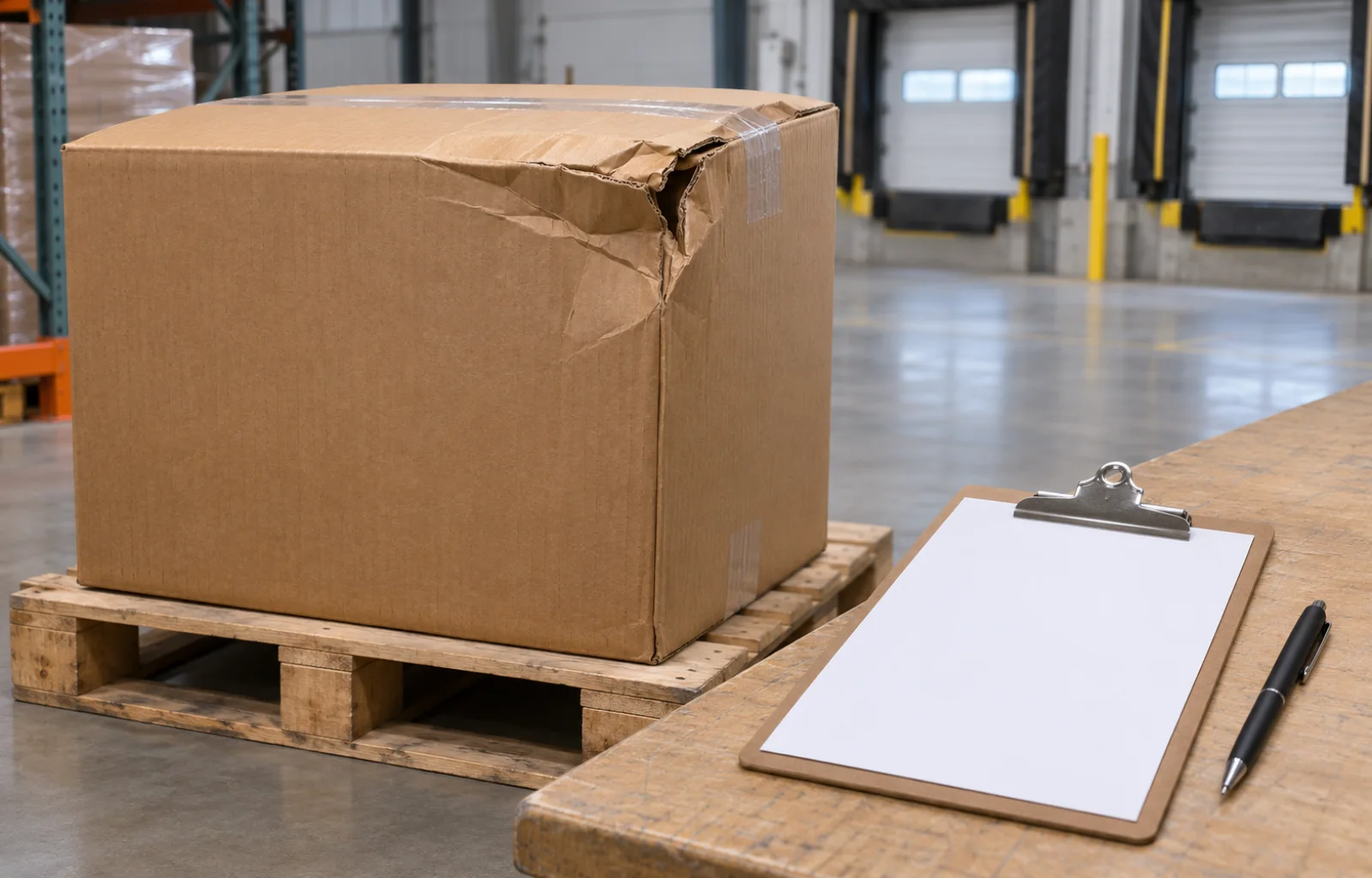
A receiver writes that two cartons arrived crushed, the driver sends a photograph, and dispatch closes the delivery. That hypothetical sequence documents a problem, but it leaves a separate commercial task unfinished: filing a cargo claim. For fleets and their shipping customers, confusing those steps can turn a visible delivery exception into an unresolved account balance. This FreightNews resource examines the federal claims-processing rules verified November 8; it reports no new rule or incident.
Under 49 CFR 370.3, a damage or shortage notation on a delivery receipt does not, standing alone, meet the minimum filing requirements. The rule calls for a timely written communication to a proper carrier that identifies the shipment, asserts liability and seeks a specified or determinable monetary amount. An inspection report or damage appraisal alone is also insufficient. The distinction is between evidence of condition and a demand for payment, even when the evidence includes a dollar figure.
Consider an illustrative shipment of twenty cartons with two damaged at delivery. A photograph can show packaging condition; the delivery record can identify the exception. A separate claim communication should connect the shipment identifier, the alleged loss and the amount sought, with a basis for determining that amount. FreightNews’s practical recommendation is to give one office employee ownership of that connection. A driver can report what happened without being expected to settle valuation or liability at the dock.
The scope matters. Section 370.1 addresses claims processing for property moving in interstate or foreign commerce by motor carriers and freight forwarders subject to the specified federal transportation law. It is not a universal procedure for every warehouse, broker, insurance or ocean dispute. The filing rule also refers to applicable time limits and carriage terms. Identify the actual movement, proper carrier and governing documents before assuming that sending a complaint to any participant has completed the filing task.
 See Pro FleetSync in action
Once a proper claim arrives, section 370.5 generally requires the carrier to acknowledge it in writing within thirty days unless it has already paid or declined it in writing within that period. The acknowledgment must identify additional evidence or information needed to process it. The rule also requires a claim file number and recording of the receipt date. For the fleet’s claims desk, those details make the difference between a message somewhere in an inbox and a case that can be tracked.
Supporting evidence remains important after filing. Section 370.7 requires prompt, thorough investigation and addresses documents needed for that investigation, including the bill of lading, freight-charge evidence and invoice or other value support. FreightNews recommends linking those records to the delivery exception and keeping the original factual account distinct from later estimates. A carton’s damaged exterior does not by itself establish the value of its contents, and a claim submission does not establish that the carrier owes the sum demanded.
The next calendar entry is not an automatic payment date. Under section 370.9, the carrier must pay, decline or make a firm written compromise offer within 120 days of receipt. If it cannot finish processing the claim within that period, it must provide a written status and reason for delay then and at each succeeding sixty-day interval while the claim remains pending. A claims dashboard should therefore distinguish an acknowledgment, a request for documents, an offer and a completed settlement.
For a small fleet, the financial value of this workflow is visibility. Keep the disputed amount attached to its shipment and follow-up date so an unresolved claim does not disappear among ordinary delivery paperwork. For a shipper, confirm who will submit the claim and retain evidence that the proper carrier received it. These are FreightNews operating recommendations: they organize the handoff without deciding a disputed claim’s merits. The useful closeout question is whether the delivery exception has a named owner, a documented claim status and a next action.