

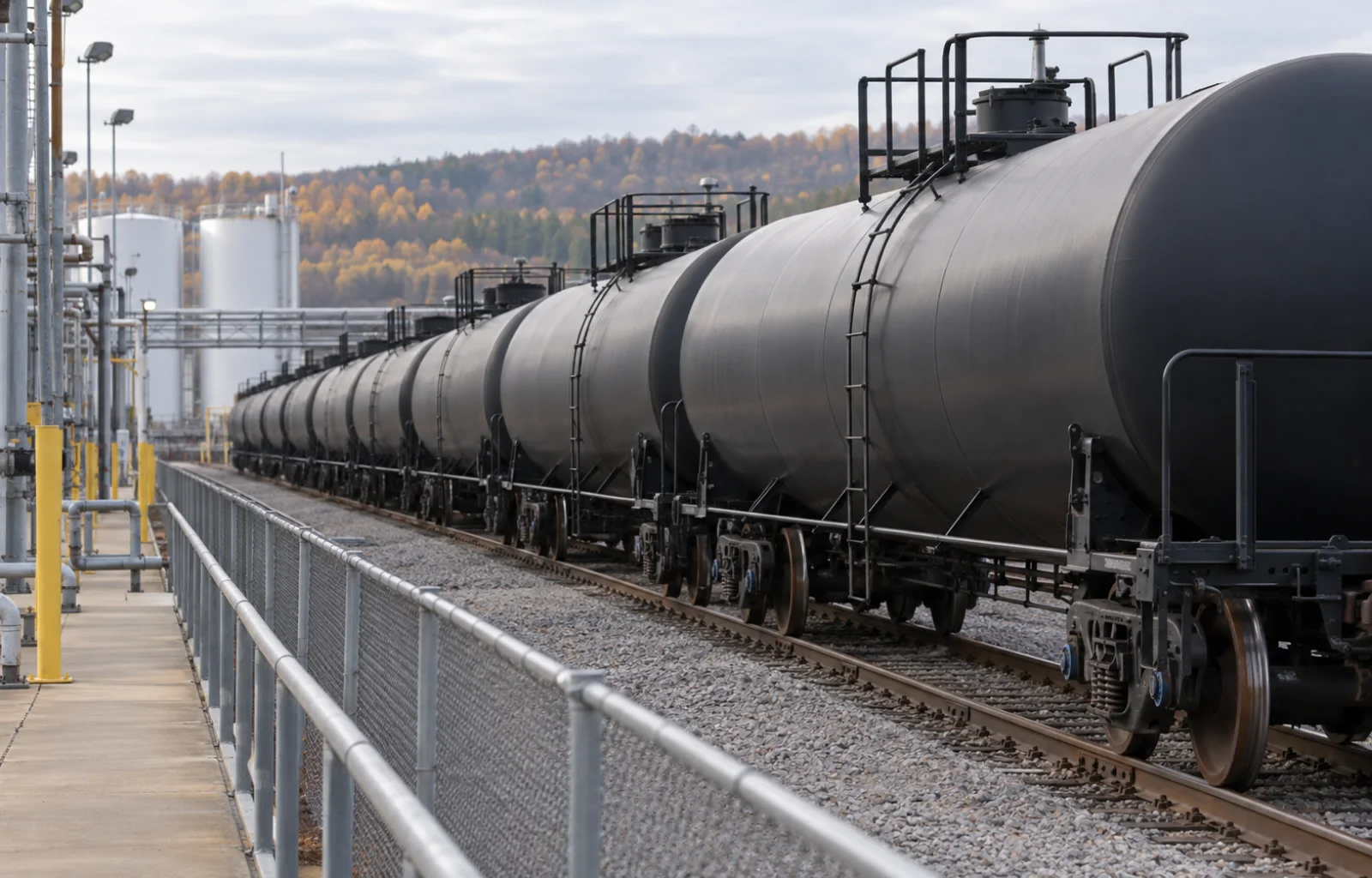
A new national rail tank-car report offers encouraging evidence of fleet modernization and a warning against reading annual statistics as a dated compliance finding. BTS said September 30 that DOT-117 and retrofitted DOT-117R cars represented 76% of the cars that carried Class 3 flammable liquids in 2025, up from 73% in 2024. That is a description of the observed fleet, not proof that every individual movement met its applicable deadline.
The report also counted 135 jacketed CPC-1232 cars carrying crude oil and 12 carrying ethanol during 2025. Their phaseout deadline for those uses was May 1, 2025. BTS explicitly says it counts a car if it carried the liquid at least once during the year and lacks information about when during that year the use occurred. A January movement and a June movement can therefore enter the same annual count while falling on opposite sides of the deadline.
That limitation cuts both ways. The presence of an older car in the annual total does not establish a post-deadline violation; the national improvement does not clear a specific car for a new load. To assess an individual movement, the missing evidence is its date, cargo classification and equipment specification. The report is neither an enforcement case file nor a substitute for those records.
The timetable is also cargo-specific. The current table in 49 CFR 173.242 identifies May 1, 2025 for jacketed CPC-1232 cars carrying unrefined petroleum products or ethanol, while specified older cars carrying other Class 3 liquids in Packing Groups II or III face May 1, 2029. Section 173.241 separately shows the 2029 date for covered Packing Group III materials. Those provisions do not make 2029 a blanket permission for every flammable-liquid car; other applicable packaging requirements and cargo distinctions still control.
The national fleet count cannot establish replacement availability at a terminal either. BTS reports cars used during a year, not cars currently empty, positioned at the needed origin, available for lease or suitable for a particular product. Its survey projects 2,800 new or retrofitted DOT-117-family cars in 2026. A projected annual addition is not completed delivery, and neither number promises a slot for an individual shipper.
FreightNews infers that bulk-liquid shippers and the truck carriers serving their terminals should keep a supply decision separate from a compliance decision. Confirm which rail equipment the shipper can actually release and when the terminal can receive or transfer the product. If a rail assignment changes, test the resulting inventory, loading and receiving schedule before reserving truck capacity. The report provides no evidence of a nationwide transfer of these loads onto highways.
The practical question is specific: can the documented car carry the documented material on the planned date, and does its confirmed availability support the downstream movement? Use the BTS report to understand modernization and its remaining data limits. Use shipment-level records and qualified equipment review to settle the actual movement. An annual percentage can explain the network; it cannot date a trip.